


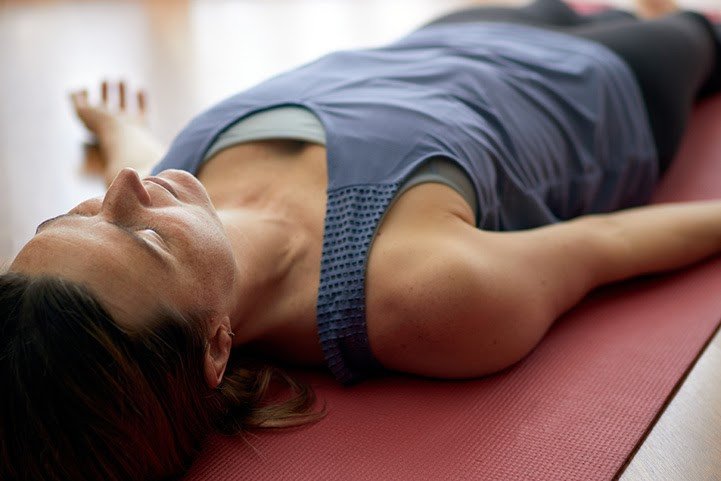
If you can lie down and listen, you can do yoga nidra meditation. That's it. No experience required. No flexibility needed. No perfectly quiet mind.
Yoga nidra meditation is one of the most accessible practices in yoga. Often called "yogic sleep," it guides you into a state of deep rest while helping you remain gently aware. In as little as 20 minutes, it can support relaxation, improve sleep quality, and help the body recover from the effects of stress.
For people dealing with stress, restless nights, or low energy, yoga nidra offers a simple place to begin. Here's everything you need to know to get started.
Yoga Nidra meditation, an ancient practice, sometimes referred to as ‘yogic sleep’ is a guided meditation that guides you into conscious awareness of each part of the body (body scan) for effortless, deep relaxation. Yoga Nidra is not about falling asleep. Rather, Yoga Nidra induces a state of deep rest and inner awareness that is as restorative as deep sleep. Although the goal of Yoga Nidra isn’t to fall asleep, it is possible to fall asleep if you are carrying lots of fatigue.What makes yoga nidra distinct is what happens at the threshold between waking and sleeping. This in-between state, known as the hypnagogic state, is where the body can rest deeply while the mind remains gently aware. It's one reason a 20-minute yoga nidra meditation can leave you feeling surprisingly refreshed. You're not quite asleep, and you're not fully awake. You're resting somewhere in between.
If you ask a yoga teacher when you should do Yoga Nidra, that yoga teacher is likely to say following yoga postures. If you ask a meditation teacher the same question, they are likely to say when you need a power nap. If you ask an insomniac, they might say at night in bed. There is no wrong answer! Whatever works best for you is the best time.
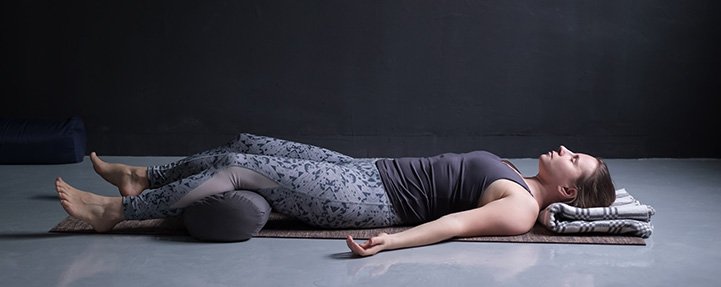
Choose a quiet space where you will be able to relax without disturbance. It is recommended to do some light stretching, exercise, or a yoga practice before you start the Yoga Nidra meditation. Dim the lights and grab a blanket for comfort. This meditation is performed lying flat on a yoga mat or other firm surface on your back in Corpse Pose (Shavasana). Make sure you are comfortable, as you will be in this position for 20 minutes, possibly a little longer if you choose or fall asleep.
A few simple comforts can make the experience even better. An eye pillow helps block out light and makes it easier to relax. A blanket can help you stay warm while you're resting. Even a small chill can become distracting when you're lying still for 20 minutes. The more comfortable you are, the easier it is to settle into the practice.
Note that if this is your first time experiencing Yoga Nidra meditation you might want to use the guided version in the video below.
If you fall asleep during the practice, that's completely okay. It often means your body needs rest. Remember, there is no wrong way to practice Yoga Nidra. With regular practice, many people find it becomes easier to remain gently aware while the body relaxes deeply.
https://www.youtube.com/watch?v=zLJu3wQA1Ko
The benefits of yoga nidra are well documented. What makes the practice unique is that it supports both the body and the mind at the same time.
It encourages deep rest. Yoga nidra helps the body shift into its natural rest-and-digest mode. Breathing slows. Muscles soften. The body gets a chance to recover from the effects of daily stress and constant activity.
It may help lower cortisol. Chronic stress can keep cortisol levels elevated, making it harder to relax and sleep well. One of the reasons people turn to yoga nidra meditation is its ability to support the body's natural relaxation response. For more on managing stress hormones, read our Cortisol Detox guide.
It promotes relaxed awareness. During yoga nidra, brain activity often shifts toward alpha waves, which are associated with a calm, relaxed state. This is one reason many people feel both rested and mentally clear after a session.
It supports emotional well-being. The guided body scan encourages you to notice sensations without judging or changing them. Over time, this can help reduce mental tension and create a greater sense of ease.
It may help reduce stress and discomfort. Research suggests yoga nidra can support stress management, improve sleep quality, and help people cope more effectively with physical and emotional tension.
It is accessible to almost everyone. There is no wrong way to practice Yoga Nidra, and anyone can do it. You don't need previous meditation experience. You simply lie down and follow the guidance.
It fits easily into daily life. A 20-minute yoga nidra session requires no special equipment, warm-up, or recovery time. Many people find it easy to practice consistently, whether as a midday reset or part of their evening routine.
Yoga nidra meditation and traditional meditation share a common goal: helping you experience greater calm, awareness, and well-being. The way they get there is different.
Yoga nidra is always guided and practiced lying down. You follow an instructor's voice through a structured sequence that typically includes a body scan, breath awareness, paired sensations, visualization, and a personal intention, sometimes called a sankalpa. The practice is designed to guide you into deep rest while helping you remain gently aware.
Meditation is a broader category. It includes many different approaches, including seated meditation, walking meditation, mantra-based practices, and breath-focused techniques. Some are guided. Many are practiced independently.
For many people, yoga nidra is an accessible place to begin. If sitting meditation feels difficult, or if you need deep physical rest alongside mental relaxation, yoga nidra offers both. It meets you where you are.
For most healthy adults, yoga nidra meditation is safe, gentle, and highly accessible.
People experiencing severe depression, active psychosis, or significant unresolved trauma may benefit from working with a qualified teacher who can offer trauma-sensitive guidance and modifications. This helps ensure the practice feels supportive and appropriate for their individual needs.
If you're unsure whether yoga nidra is right for you, speak with your healthcare provider or connect with a certified instructor for guidance. For the vast majority of people, yoga nidra is a safe and approachable practice.
Most yoga nidra meditation sessions last between 10 and 45 minutes. A 20-minute session is often the sweet spot for beginners. It's long enough to experience deep relaxation and short enough to fit into a busy day.
You may have heard the claim that "20 minutes of yoga nidra equals 4 hours of sleep." It's important to understand what that means. Yoga nidra can create a profound state of rest, which is why many people wake up feeling refreshed and restored. But it is not a literal hour-for-hour replacement for sleep.
A full night's sleep supports essential biological processes that yoga nidra cannot replace. Think of yoga nidra as a powerful complement to healthy sleep, not a substitute for it.
Whether you practice for 10 minutes or 45, consistency matters more than duration. A regular practice often delivers greater benefits than an occasional longer session.
Although Yoga Nidra offers a meditative experience, there is so much more to a meditation practice that incorporates techniques like mantra-based and breath-based meditation. When you practice Yoga Nidra you will gain all of the above-mentioned benefits but generally speaking, those benefits will quickly fade if the practice is missed or stopped. Whereas most other meditation techniques’ benefits build over time and definitely surpass what is possible through Yoga Nidra. Here too, missing your meditation practice repeatedly or stopping altogether could cause beneficial gains to diminish.
Want profound relaxation? Yoga Nidra can do that!
Want restful sleep? Yoga Nidra can help with that!
Want better immunity, greater mental focus, healthier blood pressure, increased self-esteem, more optimism, and life satisfaction, along with personality development? Try a breath-based meditation technique.
If you haven’t yet heard about SKY Breath Meditation, you have now! SKY has been shown to give 3 times more time spent in deep, restful stages of sleep. It is also highly effective in reducing stress (56%) and non-clinical anxiety (23%). And on the upswing, SKY was shown to increase immunity (33%) and life satisfaction (21%). In fact, studies have also shown improvements in areas of blood pressure, addictive behaviors, PTSD, and respiratory function.
Imagine that, your breath is the key to unlocking everything you are looking for better health and well being including better sleep!
To learn more about SKY Breath Meditation attend a free online session.
How is yoga nidra different from regular meditation?Yoga nidra meditation is always guided and practiced lying down. You follow an instructor's voice through a structured sequence that typically includes a body scan, breath awareness, paired sensations, visualization, and intention-setting. Regular meditation is broader and can include seated, breath-based, mantra, or walking practices. Some are guided, while others are practiced independently.
Can yoga nidra replace sleep?
No. Yoga nidra supports sleep, but it does not replace it. You may have heard the claim that "20 minutes of yoga nidra equals 4 hours of sleep." This refers to the depth of rest the practice can provide, not a literal hour-for-hour replacement. A full night's sleep is still essential for overall health and recovery.
Who should not practice yoga nidra?
For most healthy adults, yoga nidra is safe and highly accessible. People experiencing severe depression, active psychosis, or significant unresolved trauma should consider working with a qualified teacher who... [truncated]