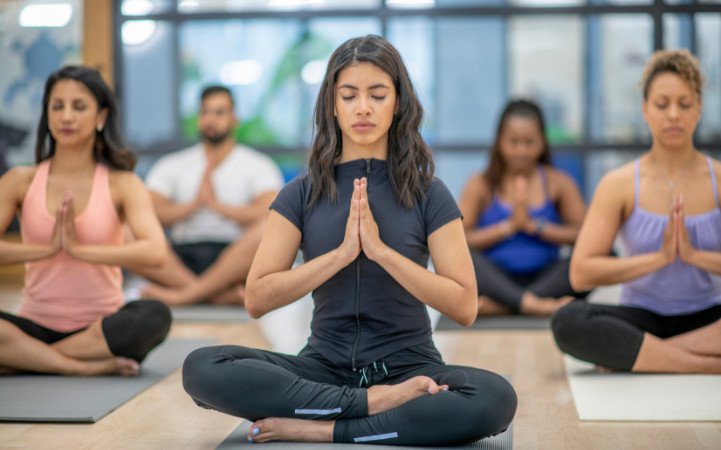


Yoga for beginners can be simple, short, and gentle. This guide covers a few simple poses, a short first session at home, and what to expect during your first week.
The beauty of yoga is that it welcomes every body. You can begin whether you feel flexible or tight, fit or out of practice. With regular practice, yoga may help strengthen your body and calm your mind.
You do not need to be flexible or hold a perfect pose. Focus on steady breathing, gentle movement, and how your body feels. Feeling calmer and more present matters more than how a pose looks.
You do not need an hour, an advanced pose, or a perfect stretch to begin. You need about fifteen minutes and a willingness to breathe. Let’s get started.
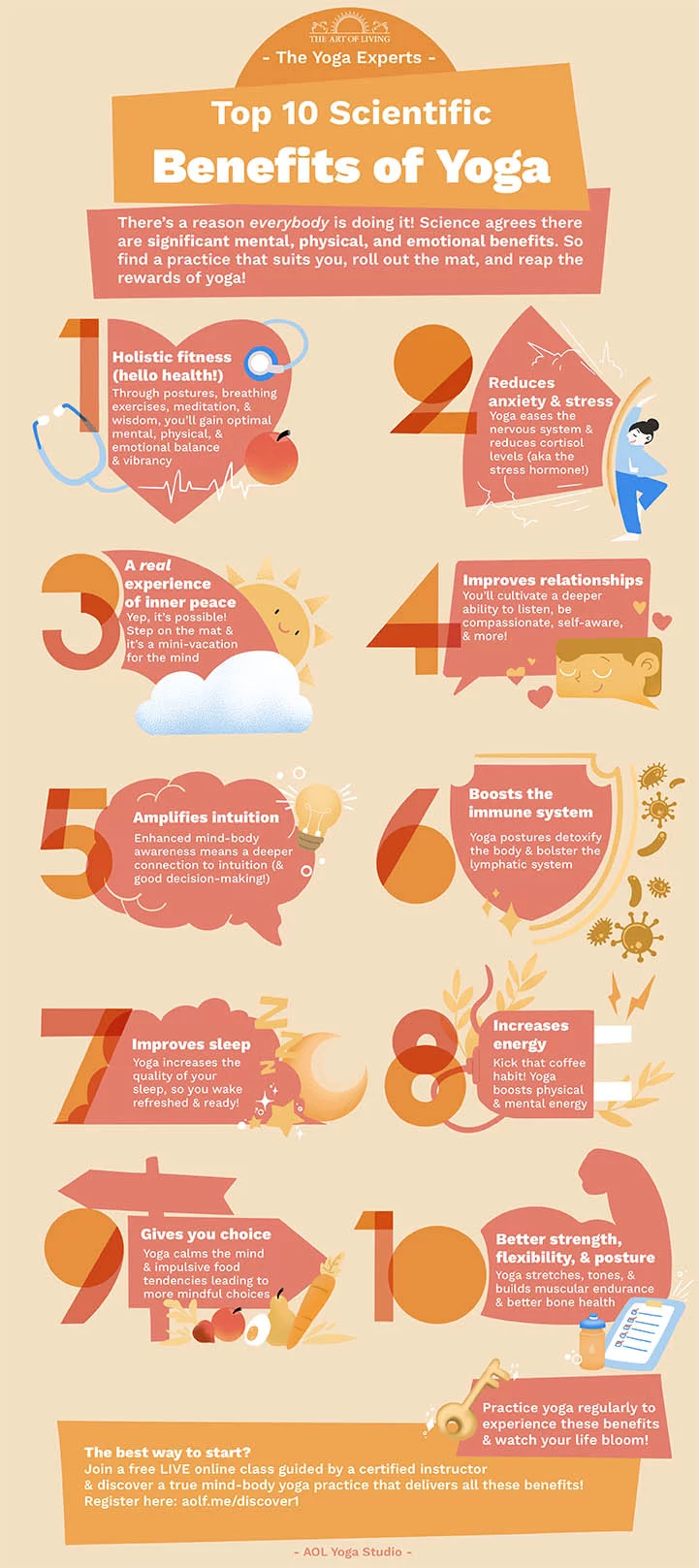
The research on yoga's benefits is more robust than most people realize. Here's a visual overview of what a regular practice delivers across body, mind, and mood.
If you are learning how to do yoga, there is no rush to master every posture. Start with these simple yoga poses, move slowly, and keep your breath steady. Follow each link for complete instructions and modifications. Never force a pose or push through pain.
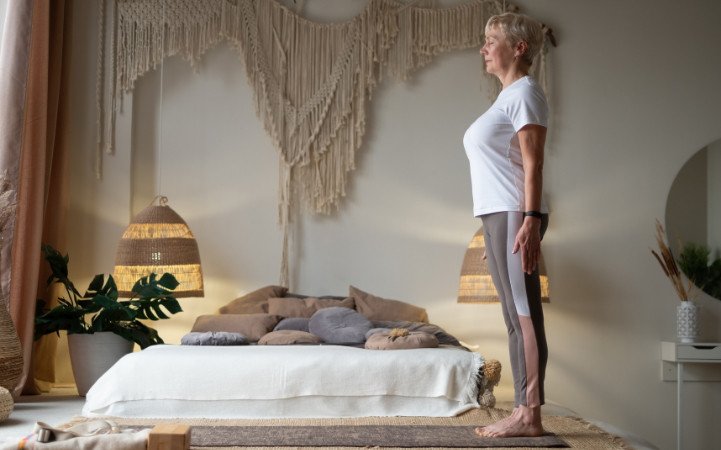
Stand tall with your weight spread across all four corners of your feet. This foundational pose builds body awareness and prepares you for other standing poses. Hold for three to five slow breaths. Beginners often rush through it, so give it the same attention as any other pose.
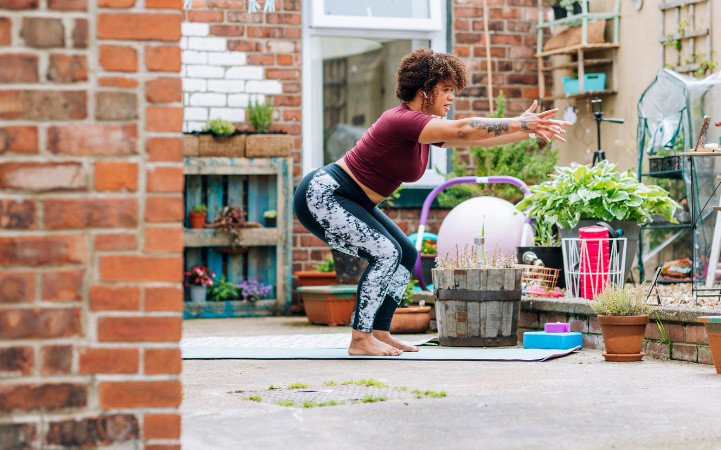
From standing, bend your knees and send your hips back as if sitting in a chair. It strengthens your thighs and core. Hold for 20 to 30 seconds, or less if needed. Keep your knees in line with your toes instead of letting them collapse inward.
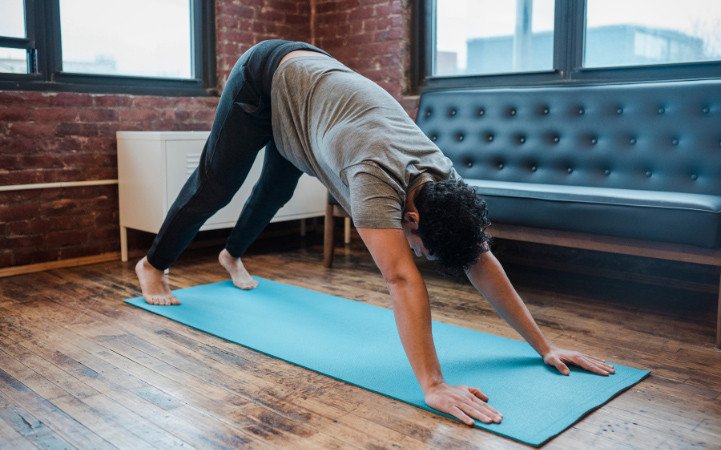
Begin on your hands and knees, then lift your hips into an inverted V. This pose lengthens your spine and works your shoulders, arms, and legs. Hold for three to five breaths. Instead of forcing your heels down, bend your knees if your back rounds.
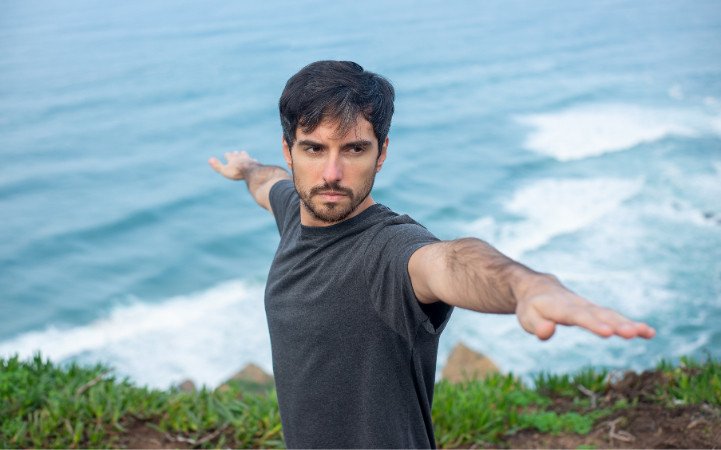
Step one foot back, turn your torso forward, bend the front knee, and raise your arms for Warrior I. This pose helps strengthen your legs and build balance. Hold for five breaths on each side. Keep your front knee above your ankle and pointing in the same direction as your toes.
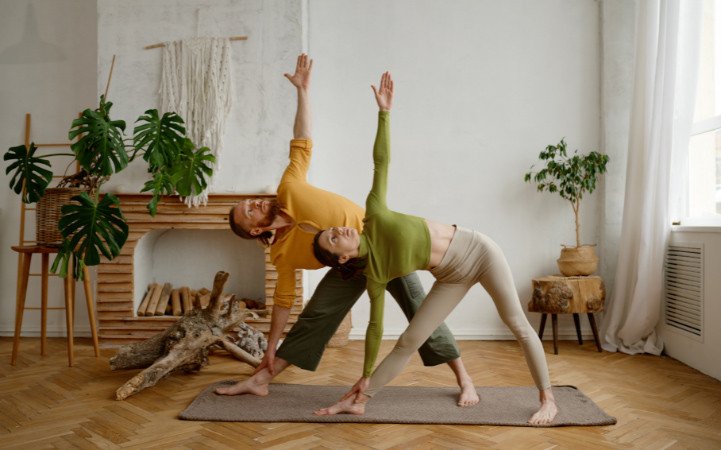
Stand with your feet wide, turn one foot out, extend both arms, and reach toward your front shin. This pose stretches your legs and hips while building balance. Hold for three to five breaths on each side. Keep your chest open instead of forcing your lower hand to the floor.
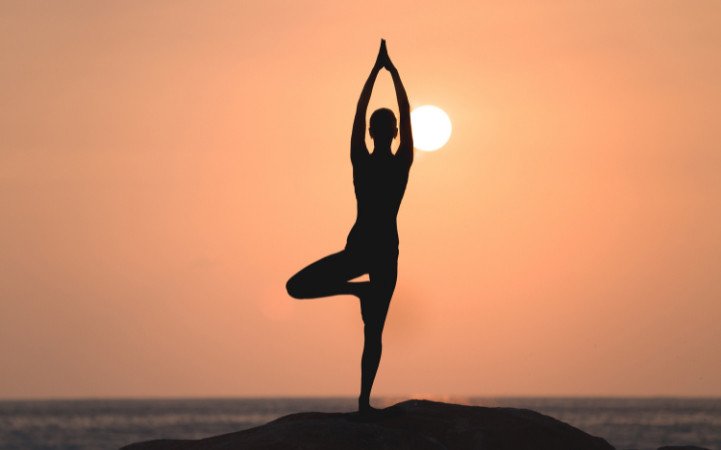
Shift your weight onto one foot and place the other foot on your inner calf or thigh. A steady gaze can help you balance and focus. Hold for five to ten breaths on each side. Never place your raised foot directly against your knee joint.
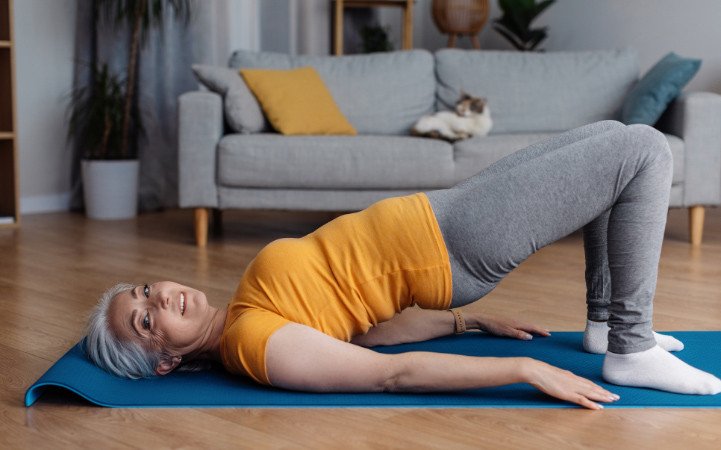
Lie on your back with your knees bent, feet hip-width apart, and arms beside you. Lift your hips to help strengthen your glutes and back while opening your chest. Hold for three to five breaths. Keep your knees hip-width apart instead of letting them spread outward.
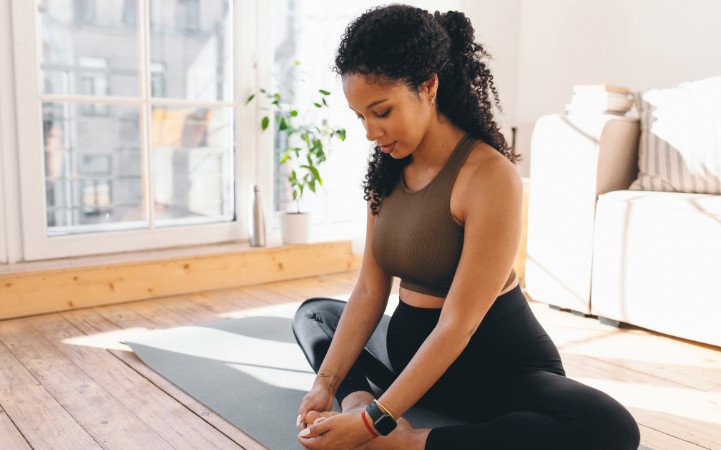
Sit tall with the soles of your feet together and your knees open to the sides. This pose gently stretches your hips and inner thighs. Hold for five to ten breaths, or slowly move your knees if comfortable. Let your range develop without pressing your knees toward the floor.
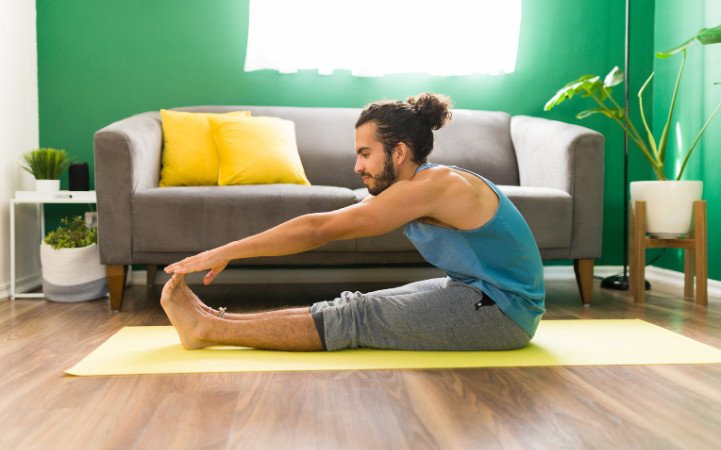
This version starts with your legs crossed and your hands resting behind your back. Fold forward from your hips to stretch your lower back and glutes. Hold for three to five breaths, then rise slowly. Do not force your forehead to the floor; use a cushion or block if needed.
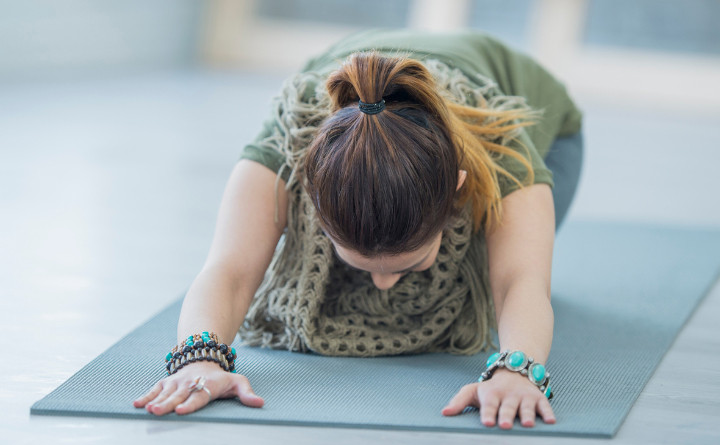
Sit back toward your heels and fold forward with your arms extended or resting beside you. This pose gently stretches your back, thighs, and ankles. Hold for five to ten breaths, or longer if comfortable. Use support if needed, and remember that rest is part of yoga.
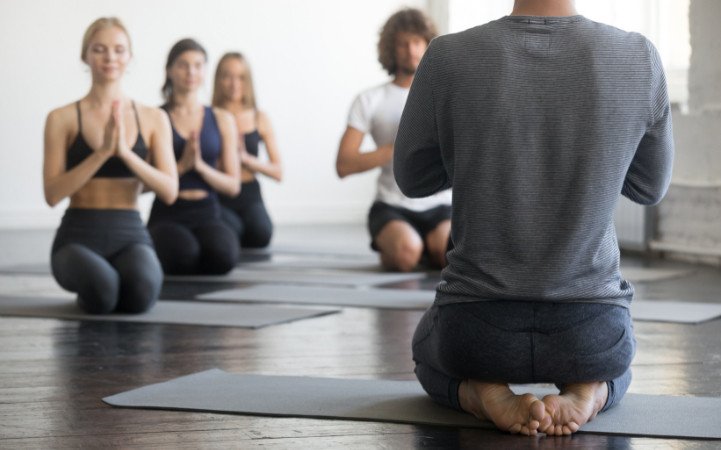
Kneel with your hips resting on your heels and your spine tall. This pose offers a steady seat for breathing practices. Hold for a few breaths, or longer if comfortable. If your knees or ankles hurt, use a cushion or choose another seated position.
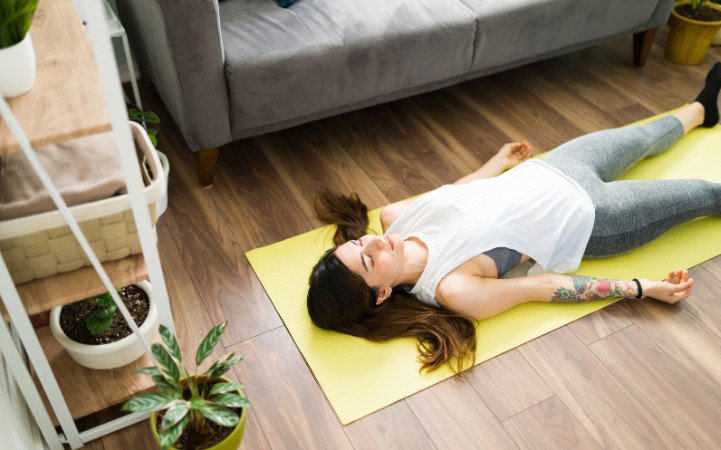
Lie flat on your back with your arms relaxed, palms facing up, and eyes closed. This pose allows your body and breath to settle after movement. Stay for five to ten minutes. Beginners often skip it, but this quiet ending is part of the practice.
You do not need a studio or a spare hour to begin. Allow about 15 minutes, or closer to 20 if you take longer breaks. Move through this six-pose beginner yoga sequence in order.
That is it. If the sequence feels comfortable, try it three times during your first week. A short, steady practice counts.
When you can move through the first sequence with steady breathing and no pain, you may be ready for more. Learn one posture at a time and never force your range of motion.
Advanced postures such as wheel pose and shoulder stand can wait until you have more experience. When you are ready, browse 50 Yoga Postures for Health, Flexibility, and Inner Strength and consider learning complex poses with a qualified instructor.
New movements may leave your muscles mildly sore. Soreness is not proof of progress, so do not push through sharp or lasting pain.
Your mind may wander, especially when the pace slows. Bring your attention back to your breath as often as needed.
You may not move as far as you expected, and that is fine. Flexibility may develop gradually with regular practice.
What matters most in week one is not how deeply you stretch. It is whether you return to the mat.