


Death may be one of the few things every human being has in common and one of the things we are most reluctant to talk about.
We wonder about it, though.
What happens after death? Is there really something beyond this life? Will we see the people we love again? If reincarnation is real, how does a soul end up in one life rather than another?
And perhaps the biggest question of all: How much of it is already decided?
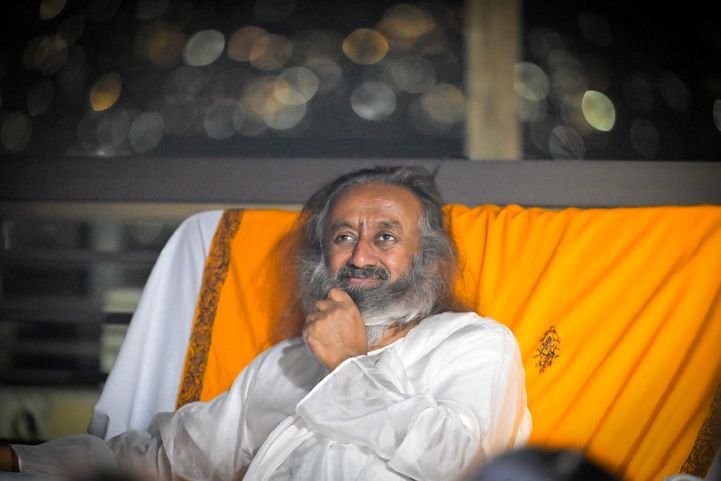
People have been asking questions like these for thousands of years. They have also asked Gurudev Sri Sri Ravi Shankar, sometimes quite directly.
His answers draw on ancient Vedic wisdom while making some of life's biggest mysteries surprisingly approachable.
Here are seven questions about death you may have wondered about, even if you've never actually asked them out loud.
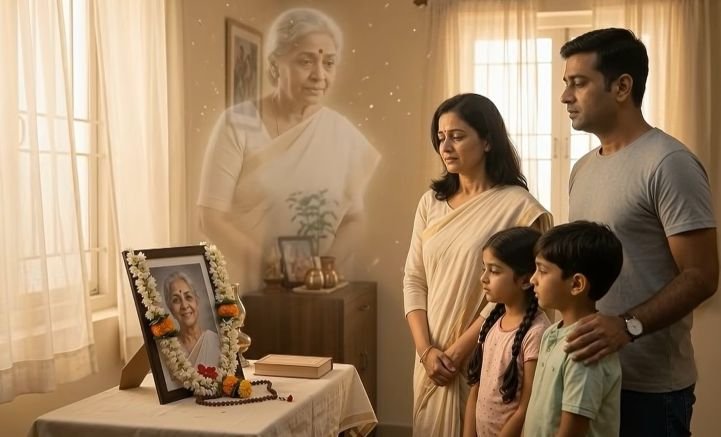
If everything happens according to karma, it might seem logical that the time of our death is already decided.
According to Gurudev, it isn't quite that simple.
"In life, not everything is predetermined," he explains. Human beings have free will, including the choice of whether we move toward greater freedom or become bound again.
And even what appears destined may leave room for grace.
Gurudev points to the ancient story of Markandeya, whose death was said to be destined for the age of 16. Markandeya prayed to Lord Shiva, and his life was extended.
The story is associated with the Mahamrityunjaya Mantra, one of the most revered mantras in the Vedic tradition.
Gurudev describes the essence of the mantra beautifully: May I live with full strength and clarity until my last breath, and when the time comes, may I leave as effortlessly as a ripe fruit drops from its branch.
Perhaps the question isn't simply whether the date of our death is written somewhere. It is also how we live until it arrives—and how freely we are able to let go when it does.
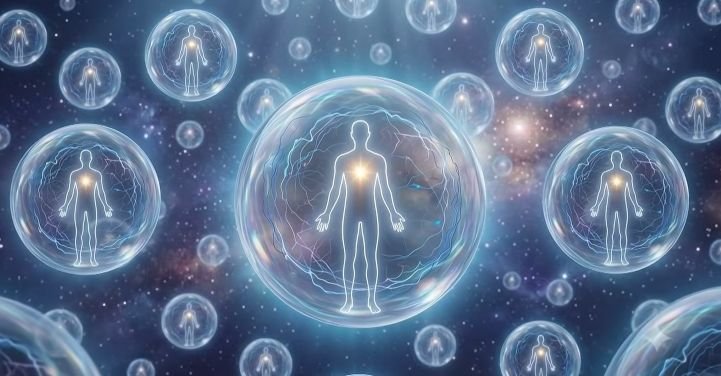
What happens during that mysterious interval between one life and another?
Gurudev uses a remarkably simple image: a seed.
Think about what happens between the time a tree produces a seed and the time that seed becomes a new plant. From the outside, very little appears to be happening. The seed remains contained within its shell.
"Similarly," Gurudev explains, "the soul remains in a realm peacefully."
It is an intriguing way to think about the space between lives—not necessarily as an ending, but as a state of potential.
The seed is not the tree it once was.
It is not yet the tree it will become.
And yet, something remains.

If we are reborn, why are we born here?
Why these parents? This country? These circumstances?
According to Gurudev, karma plays a role.
But he also points to something more unexpected: the love between the parents.
He explains that every soul carries a particular level of energy, along with a mixture of impressions and karma. The quality of love between prospective parents can help attract a soul with corresponding energy.
Gurudev calls this one of the "secrets of birth."
And karma does not necessarily reveal itself immediately.
Someone may be born into poverty and later prosper as favorable karma comes into action. Another may be born into comfortable circumstances and later encounter great turmoil.
There are, Gurudev says, all sorts of possible "permutations and combinations."
Birth, from this perspective, is neither completely random nor nearly as straightforward as it might appear.
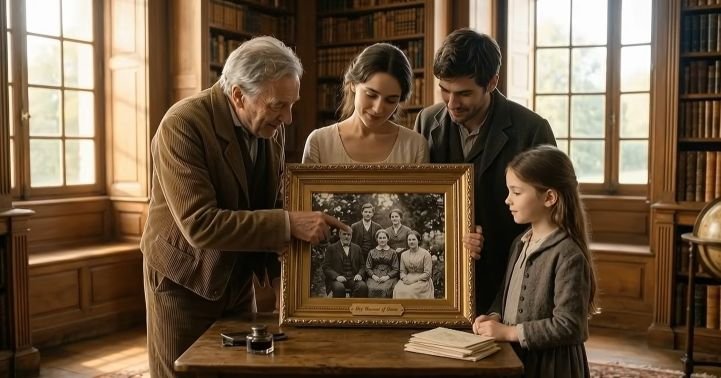
For anyone who has lost someone they love, this may be the question beneath all the other questions.
Will I see them again?
According to Gurudev, yes. He explains that the first encounter may be with one's guru or ishta, one's chosen or beloved form of the Divine, a "guiding light" associated with transcendence.
Then, he says, we encounter our mother, other relatives, and friends.
But don't imagine a noisy family reunion.
There is no complaining. No accusing. No fighting. In fact, Gurudev says there aren't words at all.
The communication is nonverbal.
He also offers an explanation for an apparent paradox: What if the person we hope to meet has already taken another birth?
Gurudev compares it to a radio program that has ended but whose recording can still be retrieved. A soul may have taken another birth, he says, while its images or reflections remain accessible.
Our ordinary understanding of time, he suggests, doesn't quite apply there.
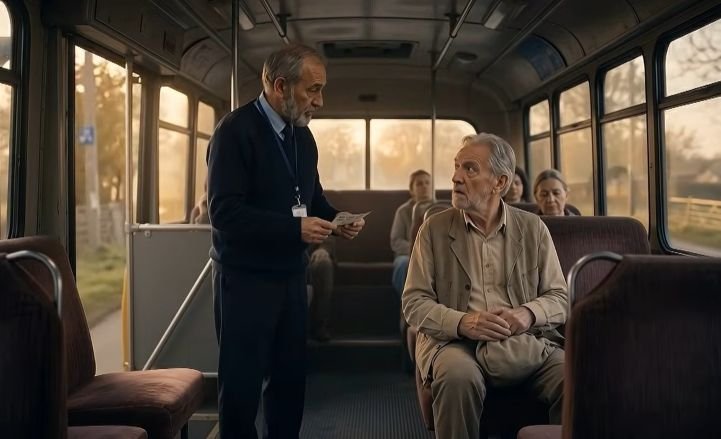
Gurudev has a wonderfully down-to-earth analogy for this one.
Imagine that you buy a ticket, get onto a bus, and the conductor checks your ticket.
"This is not your bus. You have to get off."
That's essentially how he describes a near-death experience.
The subtle body separates from the physical body, but the journey isn't meant to continue. The person comes back.
People who have had near-death experiences frequently describe encountering light. Gurudev takes that observation one step further.
For someone who has gone deeply into meditation and experienced samadhi, he says, the relationship with that light changes.
"You see the light as separate from you," he explains. But with deeper realization, "you are the light."
Until we realize that, we see the light outside ourselves.
And even that, he says, is "one step towards the light."

If the idea of reincarnation already stretches the imagination, Gurudev stretches it considerably further.
He speaks of 118 worlds, including ours, and describes realities very different from the physical conditions we experience here.
In some, he says, air may behave almost like water, allowing beings to move or float through it. He connects experiences of floating and sliding sometimes reported during out-of-body experiences with glimpses of possibilities beyond the world our senses ordinarily perceive.
"Our brain is just a frequency analyzer," Gurudev says. "We only catch certain things."
In other words, what we are capable of perceiving may not represent everything that exists.
"The existence is fascinating," he says.
"And the existence of the spirits is even more fascinating."

When we know someone is dying, suddenly their presence becomes precious. Things that once seemed important fall away. We pay attention differently.
So why don't we live that way all the time?
Gurudev's response begins with a little humor:
"Well, that is my question, too."
Then he points to a profound contradiction within us.
Some part of us senses that we are eternal. And according to the wisdom traditions, that intuition isn't entirely wrong: the soul doesn't die.
The body, however, does.
The confusion comes when we mistake one for the other.
"The part of you which is eternal, you don't know what that part is," Gurudev explains. And the part that is perishable, we know—but we don't fully recognize that it is temporary.
When the distinction becomes clear—the body is perishing, but I am eternal—Gurudev calls it viveka, or discrimination.
And perhaps that changes the way we think about both living and dying.
The questions don't end with death
What happens after we die is one of humanity's oldest mysteries.
But notice where these questions eventually lead.
To karma, free will, love, consciousness, meditation. The nature of the self. And ultimately, how we choose to live the life right in front of us.
Death and life may not be separate subjects after all.

In his upcoming wisdom series, Life, Death, & Beyond, Gurudev Sri Sri Ravi Shankar will explore the deeper mysteries of life, death, consciousness, and what lies beyond our ordinary understanding.
If you've ever wondered what happens when this life ends—or what knowing more about death might teach us about being fully alive—this is an opportunity to explore those questions more deeply.