


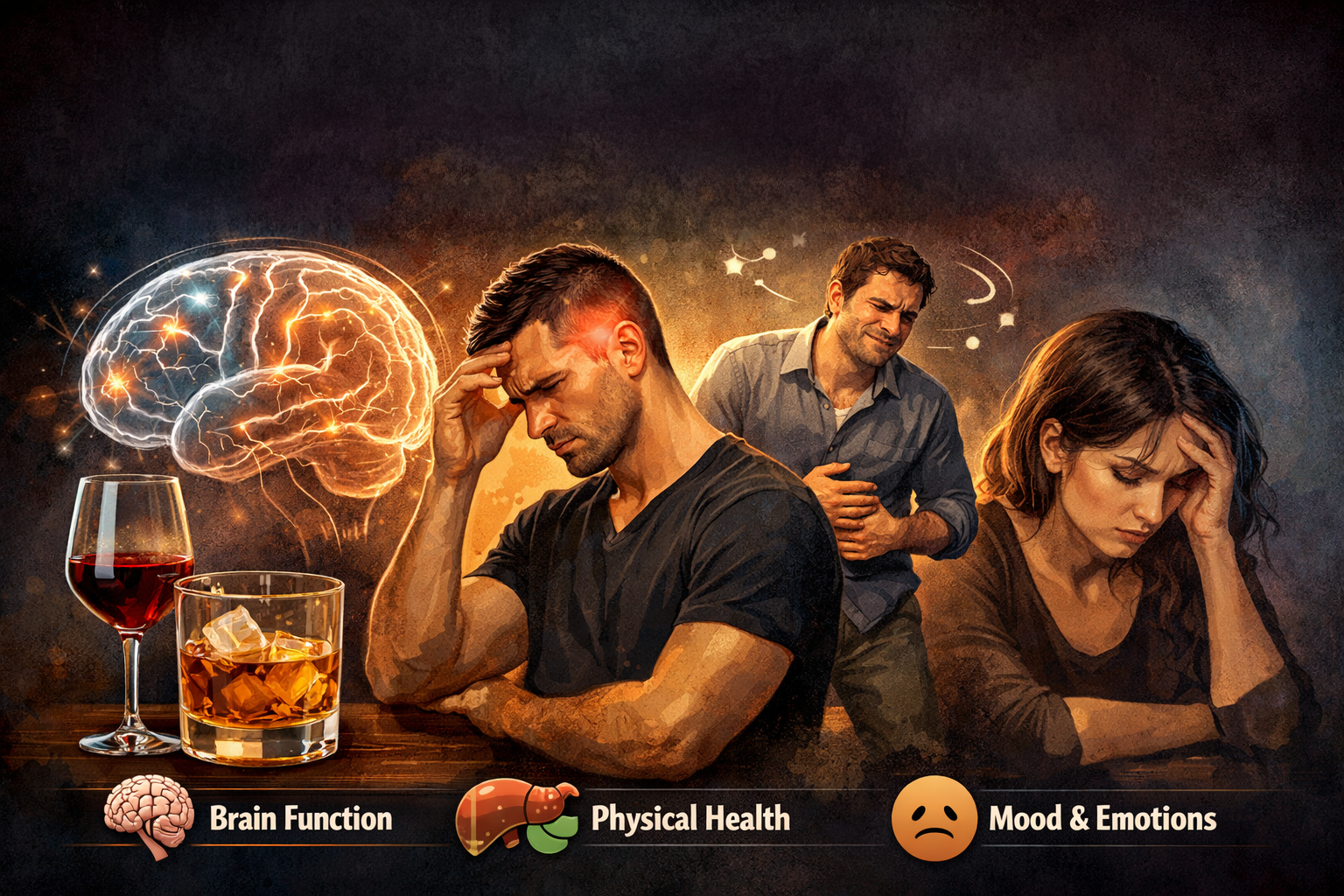
Here's the science behind what you're experiencing and why it matters.
Congratulations on reaching Day 7! You may already be noticing subtle shifts in your sleep, energy, or mood… or you may not, and both are fine. Regardless of how you’re experiencing these first few days, we thought it would be helpful to take a quick look at what's happening biologically through a scientific lens for two main reasons:
So let’s jump into it:
Alcohol (ethanol) is unusual because it's both water- and fat-soluble, which means it passes easily into nearly every cell and tissue in your body, including the brain.
Your body immediately treats ethanol as a toxin and prioritizes getting rid of it. Most of this work happens in the liver, where alcohol is broken down into acetaldehyde (a compound that's actually more toxic than alcohol itself). Acetaldehyde damages DNA and proteins before it's eventually converted into acetate and cleared.
This detox process creates oxidative stress and inflammation throughout your system. Even moderate drinking increases this strain because it's constantly being asked to clean up something it never needed in the first place.
The good news? The moment you stop drinking, your body stops having to run this emergency cleanup cycle.
Here's one of the biggest myths about alcohol: that it reduces stress.
In the short term, it feels like it does. Alcohol increases GABA, your brain's primary calming neurotransmitter, and dampens glutamate, which is associated with alertness and stimulation. This is why you might feel relaxed or socially at ease after a drink.
But your brain is always seeking balance.
When alcohol pushes your system toward "calm," your brain responds by producing more glutamate to compensate. When the alcohol wears off, that extra glutamate remains, leading to anxiety, restlessness, irritability, and the familiar experience many people call "hangxiety."
Imagine your nervous system like a seesaw. Alcohol pushes the "calm" side down. Your brain, trying to rebalance, piles weight onto the "anxious" side. When the alcohol disappears, the anxious weight is still there—until your system has time to recalibrate naturally.
This is why alcohol often increases baseline stress over time, even though it feels like a stress reliever in the moment.
What this means for you: If you're feeling anxious or restless this week, it's not weakness—it's your GABA system rebalancing. This is temporary. By week 2-3, natural calm starts returning. The body scan meditation (tomorrow) will help support this process.
Alcohol is a major disruptor of sleep, especially REM sleep, which is critical for emotional regulation, learning, and memory.
While alcohol can make you fall asleep faster, it fragments your sleep throughout the night, increases your heart rate, and suppresses deep restorative cycles. The result is what some researchers call "pseudo-sleep": unconsciousness without true recovery.
Many people who stop drinking realize they weren't "bad sleepers" at all. Their nervous system was simply being interrupted night after night.
What this means for you: Even if you're not feeling more rested yet, your brain is getting deeper, more restorative sleep. Give it 10-14 days. That's when most people report waking up feeling genuinely refreshed for the first time in years.
Alcohol causes large spikes in dopamine, the neurotransmitter involved in motivation and reward. Over time, repeated dopamine spikes lower your baseline, making everyday pleasures feel flatter and less rewarding.
This is why many people notice that during Dry January, music feels richer, conversations feel more engaging, creativity returns, and motivation increases.
Your brain is rebalancing!
What this means for you: If you're feeling a bit flat or less motivated this week, that's normal. Your brain is recalibrating its reward system. The breathwork and meditation practices from earlier this week help speed this process by naturally boosting dopamine without the crash.
The science in this post draws from leading researchers and experts in neuroscience, addiction medicine, and alcohol research. If you're curious to explore more about how alcohol affects the brain and body, here are some great resources that we pulled from for this article:
Alcohol Rewires Your Brain - Dr. Sarah Wakeman
Psychiatrist Dr. Amen Reveals What Alcohol ACTUALLY Does to Your Brain
The Surprising Way Alcohol Makes Your Brain More Anxious | Amber Hollingsworth(LPC)
What Alcohol Does to Your Body, Brain & Health | Andrew Huberman, Ph.D.