


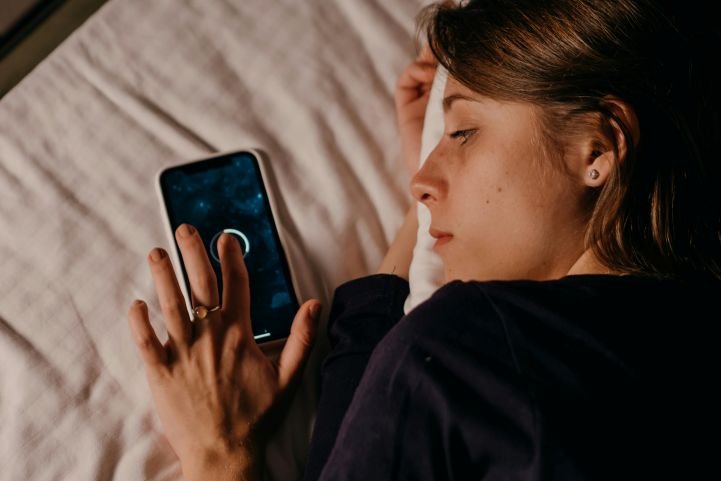
Sleep trackers promise deeper rest, better sleep hygiene, and personalized insights into the mysteries of your night. They measure everything from movement to heart rate to body temperature, claiming to translate your sleep into understandable data. All the sleep trackers are comprehensive devices that monitor multiple sleep metrics—such as temperature regulation, heart rate, and sleep stages—promising to improve sleep quality and support a full eight hours of rest. These devices also promise to enhance daily life by integrating wellness management seamlessly into your everyday routines.
But for millions of people, sleep trackers are doing the opposite of what they advertise: they are making sleep worse, not better. While the ultimate goal is to achieve good sleep, the reality can be more complicated.
This surprising problem—now well-documented by sleep scientists—is called orthosomnia, the anxiety created by trying to achieve “perfect sleep” through data. Instead of drifting peacefully to sleep, many users go to bed tense and wake up stressed, worried about whether the tracker will give them a “good score.”
Understanding this pattern is the first step toward protecting your sleep—and reclaiming the deep, natural rest your body already knows how to create.
At first glance, tracking sleep sounds helpful. But the brain responds differently than we expect.
It's also important to note that sleep trackers may not account for other factors, such as environmental influences or sleep disorders, which can affect the accuracy and usefulness of the data.
Sleep is a non-voluntary biological process. You cannot try to sleep—you can only allow sleep to happen.
But when trackers turn rest into a performance metric, the mind becomes hypervigilant, checking itself:
This monitoring activates the arousal system, the opposite of what promotes sleep.
Users often find themselves:
This creates a negative feedback loop that disrupts both falling asleep and staying asleep.
You might feel rested—but your device says you slept “poorly.”
This mismatch leads many users to distrust their body signals and rely on technology instead of intuition.
Over time, the tracker—not your own system—starts controlling your sleep experience.
One of the biggest issues is accuracy. These devices collect raw data from sensors and use algorithms to interpret it into sleep metrics. Consumer sleep trackers are not medical devices, and they cannot measure brain waves—the gold standard of sleep science. Tracking brain activity through EEG provides deeper insights into sleep quality, which most consumer trackers cannot do.
Instead, they rely on movement + heart rate patterns, which can lead to:
Studies show sleep trackers can be 20–50% off in determining sleep stages.
Trackers attempt to log time spent in each sleep phase, monitoring various stages such as light sleep, deep sleep, and REM sleep, but their accuracy is limited.
But even more important than accuracy is perception.
When you see a score like:
…it can trigger unnecessary worry that directly disrupts future sleep. Inaccurate data can also affect perceptions of recovery, as users may believe their physical and mental recovery is compromised based on flawed metrics.
Many users wake up and immediately check their sleep score. Their entire mood is shaped by a number generated during the night.
A low score can produce:
Your day begins with stress instead of calm.
Over time, this creates a negative sleep identity—a belief that you are a “bad sleeper,” even if your subjective experience isn’t that bad.
This identity then reinforces insomnia, creating a self-fulfilling cycle.

Most sleep issues tied to trackers have one root cause: an overactivated nervous system.
This is exactly what the Art of Living Sleep and Anxiety Protocol (S&AP) is designed to reset.
S&AP helps by:
It calms the sympathetic nervous system, quieting the part of the brain that monitors, overthinks, and worries.
Instead of “trying to sleep well,” S&AP teaches the body how to naturally move into rest and safety.
S&AP gently dissolves the emotional tension built up from obsessing over sleep scores.
When the mind is calm, sleep flows in its own rhythm—without forcing, tracking, or controlling.
This is why S&AP is so effective for people whose insomnia began or worsened after using sleep trackers.
Sleep tracking subtly shifts authority away from your internal experience. You may begin thinking:
This undermines your built-in biological wisdom.
S&AP helps re-establish interoceptive awareness—your innate ability to sense what your body needs—without relying on external technology to tell you whether you’re okay.
If you recognize the second list, your sleep tracker may be contributing to your sleep issues—not solving them.
You may be developing orthosomnia if you:
Many people sleep significantly better within days of removing or reducing sleep tracking.
When it comes to sleep tracking, comfort is more than just a luxury—it’s a crucial factor that can make or break your sleep quality. While the promise of better sleep habits and personalized advice is appealing, the reality of wearing a sleep tracking device night after night can be surprisingly disruptive.
Wearable sleep trackers like the Oura Ring 4, Apple Watch, Garmin Watch, and Ultrahuman Ring Air are designed to collect data on your sleep duration, heart rate variability, body temperature, and other health metrics. These devices are often praised for their accuracy and the depth of sleep data they provide. However, not everyone finds it easy to fall asleep with a device strapped to their wrist or finger. Even the best sleep tracker can become a source of irritation if it feels bulky, causes skin sensitivity, or simply reminds you of its presence every time you shift in bed. For some, this discomfort can lead to more time spent awake, lighter sleep, or even a reluctance to wear the device in the first place.
On the other hand, non-wearable sleep-tracking devices—such as under-mattress sensors or trackers on your bedside table—offer a more unobtrusive way to monitor your sleep cycle. These devices can track sleep duration, sleep quality, and other metrics without requiring you to wear anything on your body. This can be a game-changer for those who value comfort above all else. However, non-wearable trackers may not capture the same range of health data, such as heart rate variability or body temperature, and their accuracy in detecting various sleep stages can vary compared to wearable trackers.
For individuals with sleep apnea or other sleep disorders, the right sleep tracking device can provide valuable insights and even help guide conversations with a medical... [truncated]