


Most approaches to stress start with an instruction: relax, let go, quiet your mind.
It's a reasonable-sounding idea with one practical problem. It asks your mind to do the calming, using the same mind that's currently busy, distracted, or wound up.
If you've ever tried to relax because someone told you to relax, you probably know how well that can go.
Thoughts keep coming. Your body remains tense. You notice that you're not relaxing, which gives your mind one more thing to think about.
This isn't necessarily a failure of discipline or proof that you're bad at meditation. Sometimes it's simply a mismatch between what you're trying to change and how you're trying to change it.
Breath offers another way in.
Much of what happens inside your nervous system happens automatically. You don't have to tell your heart to beat faster when you're startled. You don't consciously instruct your body to tense when you're under pressure.
Your system responds before you've had much say in the matter.
Breathing is different.
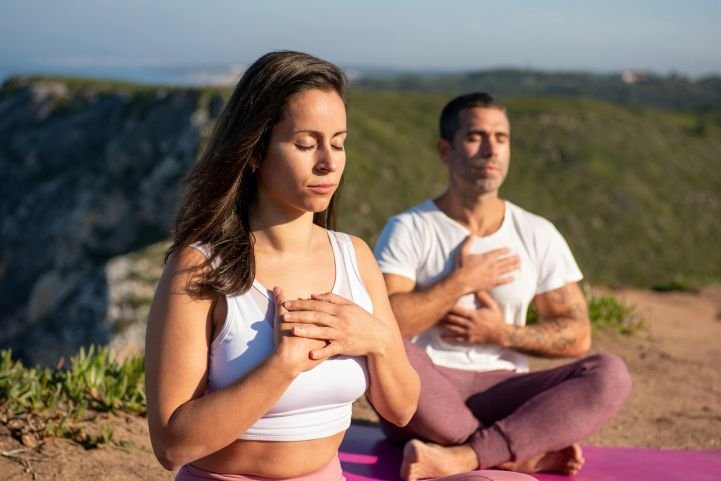
It happens automatically, but you can also change it consciously. You can slow your breath. Speed it up. Make an inhale longer or an exhale gentler. You can change its rhythm right now, even if your mind is still thinking about the email you need to answer or the conversation you wish had gone differently.
That makes the breath an unusual bridge between processes that happen automatically and those you can consciously influence.
This basic connection is at the heart of SKY Breath Meditation, taught by the Art of Living Foundation.
Its core practice, Sudarshan Kriya, uses specific breathing rhythms rather than asking you to sit still and quiet your mind. The breath gives your attention somewhere to go and your body something to do.
You don't have to wait until your mind settles before you begin.
You begin with the breath.
This connection between breathing, the nervous system, and emotional state has also made SKY Breath Meditation one of the most studied breathing practices: more than 100 peer-reviewed studies over several decades, at institutions including Yale, Harvard, and Stanford. The breadth is what stands out most:
Researchers reviewing this body of work generally agree the range of outcomes studied is unusual for a single breathing practice, while noting that larger trials are still needed before the clinical picture is fully settled. That's the honest state of an active research area, not a weakness to gloss over.
You can read about the nervous system all afternoon.
You can understand the theory. You can read the studies. You can learn what heart rate variability means and become surprisingly knowledgeable about cortisol.
And you can still have no idea what a particular breathing practice actually feels like in your own body.
That's where learning from another person can make a difference.
Art of Living has been teaching breathwork and meditation for more than 40 years, with instructors and programs now active in more than 156 countries. The practice has reached hundreds of millions of people worldwide.
But those numbers are less important than what they represent.
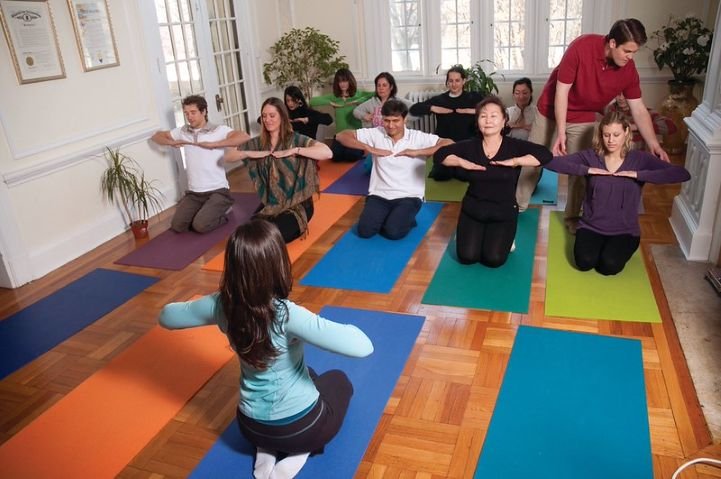
People teach this practice to other people.
There is someone to explain what you're doing. Someone to answer the question that comes up halfway through. Someone who can tell you what to expect and what not to expect.
And if you've tried meditation before and wondered why everyone else seemed to understand something you didn't, there's room for that conversation too.
You don't have to pretend you're already good at this.
Breath offers another way in.
A free 30-minute consultation is not a commitment to take a course. It is a chance to talk with someone who knows the practice and ask the questions that matter to you.
You can talk about what you have already tried, what you found difficult, and what you hope to get from meditation or breathwork. You can also get a small taste of what guided breathing feels like.
Picture sitting comfortably as an instructor asks you to bring your attention to your breath.
You hear the quiet rhythm of your own inhale. Your ribs expand. The exhale leaves with a soft rush of air.
As you follow the guidance, you begin noticing small things: how you're holding your shoulders, the movement of your ribs, the temperature of the air as you breathe.
For those few moments, you are not being asked to make your mind blank.
You are breathing, listening, and noticing.
Sometimes a few minutes of actually experiencing guided breathwork can answer questions that are hard to resolve by reading about it.
It also introduces you to something central to the SKY experience: someone is on the other side of the practice.
Someone you can talk to and ask questions.
Someone who can help you understand what comes next.
You do not have to decide today whether SKY Breath Meditation should become part of your life.
You don't have to decide whether you're a meditation person, either.
You can simply get curious about your breath.
The research gives you something substantial to explore. A conversation with an instructor gives you a chance to ask what the research does and doesn't tell us. And a few minutes of guided breathing gives you something research can't: the opportunity to notice the practice for yourself.
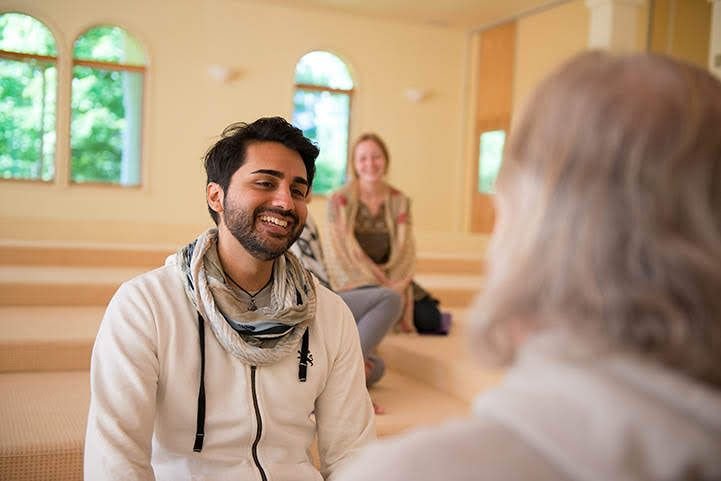
If you're curious, book a free 30-minute consultation with an Art of Living instructor.
No course commitment. Just a conversation, a little guided breathwork, and space to decide for yourself.