



Your morning routine can greatly affect your entire day. My journey with morning meditations began in 2008. These days, I dedicate an hour to this practice. The results amaze me - my stress and anxiety levels have dropped dramatically.
Life's responsibilities can make us feel overwhelmed and off-balance when we wake up. A personalized 10-minute guided meditation script can help you overcome these feelings. Morning meditation proves effective because it leverages your semi-sleepy state right after waking up. Your mind operates in the alpha brain wave state during this time. This makes you more relaxed, open, and receptive.
Each new day gives you a fresh slate and a chance to begin again. This piece will guide you through creating your perfect 10-minute guided meditation script. You'll also receive a free 10-minute guided meditation script PDF to customize. Our experience as meditation practitioners at Art of Living shows that 20 minutes helps you welcome each day with openness, enthusiasm, and gratitude.

The right conditions lay the groundwork for your 10-minute guided meditation script. Your environment, purpose, and physical positioning will give you a practical meditation experience.
A sustainable meditation practice needs the right time and place. You should pick a recording time that matches your energy levels throughout the day. Most meditation teachers say morning sessions help set your attitude, while evening practices let you reflect and settle.
Finding the perfect meditation schedule takes some trial and error. The experts at Art of Living believe consistency matters more than the exact hour. Pick a time and stick with it for a while. You can always adjust later, but don't quit trying to build a regular practice.
Your recording space needs minimal distractions. A simple, quiet corner works better than a fancy meditation space next to busy areas. Note that a spot might be peaceful at 7 a.m. but noisy by 7:30. Choose your space wisely and use soundproofing or noise-canceling headphones if needed.
Your intention should be clear before writing your 10-minute guided meditation script. Ask yourself:
Everything that follows stems from your clear intention. Slow, grounding language works best for relaxation. Focus-building meditations need crisp, centered phrasing. This approach keeps your script engaging and makes it work.
The script's introduction helps listeners shift from daily life to a meditative state. Simple, welcoming words create safety, and gentle breathing cues help them relax.
Comfort is vital during meditation—but no single position works for everyone. Sitting offers an excellent balance of focus and relaxation, but your script should mention other options.
For seated meditation, include these guidelines:
Whatever position they choose, the spine should line up with the head directly over the heart. Beginners might find a chair or a simple cross-legged pose more comfortable.
Your script should remind practitioners that the ideal meditation posture balances relaxation and alertness. Their head should stack over shoulders, shoulders over hips, with hands resting gently.
These foundational elements in your 10-minute guided meditation script create an environment where mindfulness grows naturally. Good preparation of these basics will boost the effectiveness of your guided practice.

Breath is the lifeblood of any 10-minute guided meditation script. Meditation experts at the Art of Living emphasize that our breath connects our body and mind. This makes it the perfect starting point once you've established your foundation.
Our breathing becomes rapid and shallow during stress or anxiety. This makes us feel worse and can trigger dizziness, light-headedness, and shortness of breath. So guiding your listeners through intentional deep breathing helps them relax both physically and mentally.
Your script should guide practitioners through diaphragmatic (belly) breathing. Research suggests this triggers relaxation responses in the body. This breathing technique helps moderate irregular patterns that stress or irritation often cause.
Start your script with simple directions like:
"Take a deep breath in through your nostrils... hold for a moment... and slowly exhale through your mouth, making a gentle whooshing sound as you empty your lungs completely."
Counting patterns boost focus—maybe a 4-second inhale, 7-second hold, and 8-second exhale. Each breath fills the body with oxygen and brings relaxation and calm with each cycle.
Your mind will wander during meditation. Yes, it is normal and expected—not a failure. Meditation teachers call it "the magic moment" when you realize your mind has drifted.
Your 10-minute guided meditation script should offer gentle cues to bring attention back to breathing:
Simple mental labels like "in" and "out" help maintain focus during challenging moments. You can also suggest that listeners mentally note "thinking" or "wandering" when their mind drifts. They can then gently redirect attention back to breathing.
Note that practitioners might need to begin again thousands of times—and that's perfectly fine. Each return to breath makes mindfulness stronger, just like a muscle.
Meditation breathing differs from everyday rushed breathing. It has a natural rhythm with subtle pauses at both the top of inhalation and the bottom of exhalation. These still moments create space for deeper awareness.
Mark moments of silence in your script with prompts like [PAUSE] or [LONG PAUSE]. You should indicate approximate pause lengths—3 seconds for short pauses and 7-10 seconds for longer ones works well.
To name just one example, after guiding a deep breath, add: "Now, allowing your breath to find its natural rhythm... [PAUSE]... noticing the gentle rise and fall without trying to control it."
These strategic pauses serve multiple purposes. They help practitioners adjust to the meditation state. They create opportunities to notice subtle sensations. Your 10-minute guided meditation script stays balanced and not overwhelming.
As you create your free 10-minute guided meditation script PDF, keep in mind that breath awareness isn't about perfect breathing. The goal is to cultivate nonjudgmental attention to natural breathing patterns. This breath awareness foundation prepares practitioners for deeper meditation elements that follow.
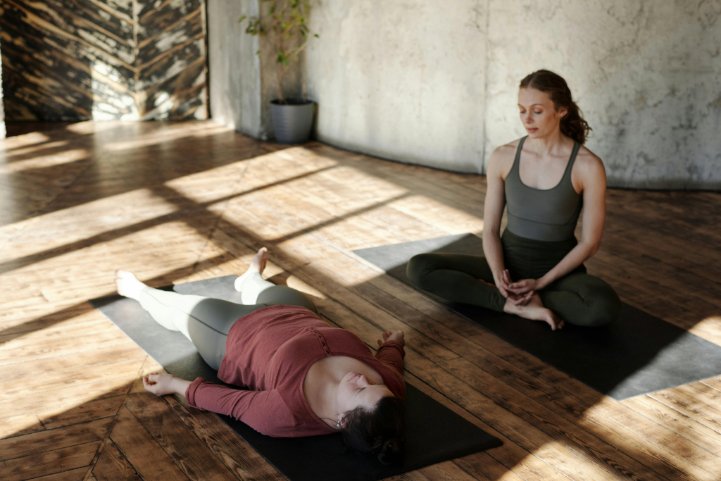
Body awareness is the next key element in your 10-minute guided meditation script. Your breath becomes your anchor first. Then you can expand awareness through your whole physical form. Our team at Art of Living has found that body scanning makes meditation significantly more effective. It connects practitioners with physical sensations they rarely notice.
Your listeners need stable breath awareness before they can direct their attention through different body regions. You can start at the head's crown and work down, or begin with the feet and move up. Both ways work equally well.
A 10-minute script needs straightforward instructions:
"Now, gently shift your awareness from your breath to your body. Starting at the top of your head, notice any sensations present... moving down to your forehead, eyes, and jaw... allowing each area to soften as your attention touches it."
Guide attention step by step through major body regions—head, neck, shoulders, arms, torso, hips, legs, and feet. Each area needs about 30-40 seconds in a 10-minute meditation. Let listeners experience their body as a whole at the end to create integration.
Your choice of words shapes the meditation experience deeply. Gentle, inviting phrases create permission rather than demands:
"I invite you to notice..." "You might become aware of..." "If you'd like, allow your attention to rest on..."
Soft alternatives work better than direct instructions. Say "notice if there's any chance for your shoulders to soften" instead of "relax your shoulders". This approach respects everyone's unique experience.
Soothing descriptive words can help evoke relaxation:
These phrases create a mental space where relaxation emerges naturally.
The body scan helps you witness what's happening rather than changing anything. Your script should encourage nonjudgmental awareness of all sensations:
"As you scan each area, simply notice what's present—perhaps warmth, coolness, tingling, pulsing, or even areas where sensation seems absent. There's no need to judge or change anything."
Note that all sensations deserve welcome—tension, comfort, numbness, or even difficulty feeling anything. People disconnect from their bodies during the day. This reconnection brings value to whatever they find.
The goal isn't perfection but presence. Your script should include brief pauses. These help listeners notice subtle sensations:
"Taking a moment to simply rest in awareness of your body... [PAUSE]... noticing 'what' is observing your body... recognizing that peaceful, still part of you that witnesses everything without judgment."
This body scan section builds a foundation for visualization and affirmation work in your free 10-minute guided meditation script PDF. Physical awareness makes later practices more embodied and helps them work better.

Your 10-minute guided meditation script can now add powerful mental elements after you establish physical awareness through breath and body scanning. The combination of affirmations and visualizations deepens the meditation experience and creates lasting positive effects.
Simple phrases that line up your thoughts with your goals and values make up affirmations. These guide your thoughts from self-doubt to confidence when you combine them with meditation. They help transform overwhelming feelings into calmness. Your script should include one or two... [truncated]