


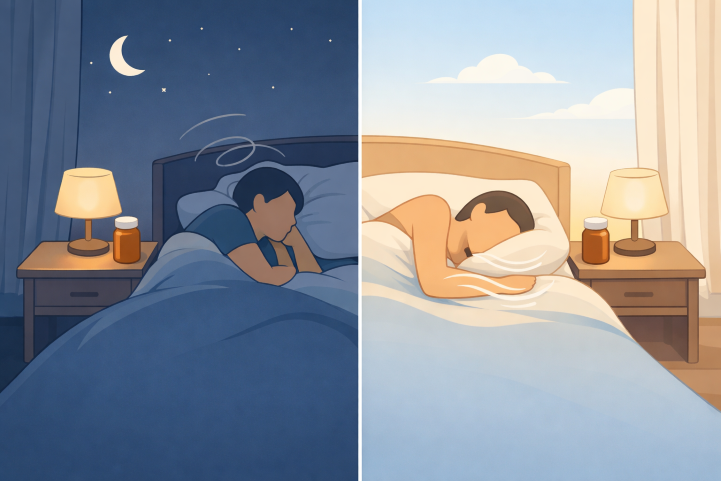
Melatonin is often the first thing people reach for when sleep becomes difficult. It’s affordable, easy to find, and widely marketed as a natural fix for insomnia. Yet millions of people take melatonin night after night and still struggle to fall asleep, wake up too early, or feel exhausted the next day.
If melatonin hasn’t worked for you, it doesn’t mean your body is broken—or that you need a stronger supplement. More often, it means the real issue isn’t melatonin at all.
The truth is that sleep is governed by more than a single hormone. When stress, anxiety, and nervous system overload are involved, melatonin alone rarely solves the problem. Understanding why it doesn’t work is the first step toward restoring deeper, more natural sleep.
Melatonin is a hormone produced by the pineal gland in the brain. Its primary job is not to make you sleepy, but to signal to your body that it’s nighttime. This signal helps coordinate your circadian rhythm—the internal clock that regulates sleep, wakefulness, body temperature, and hormone release.
What melatonin does well:
What melatonin does not do:
This distinction matters. Many people assume melatonin works like a sleeping pill. It doesn’t. If the body is still in a heightened state of alertness, melatonin’s signal can be ignored.
The body naturally produces melatonin in very small amounts—measured in micrograms. Many over-the-counter supplements contain doses that are 10 to 100 times higher than the amounts the body normally produces.
Higher doses don’t necessarily mean better sleep. In fact, excessive melatonin can:
For some people, too much melatonin actually makes sleep worse.
Melatonin works best when taken at the right time—usually a few hours before the body’s natural sleep window. Taking it too late, inconsistently, or at varying doses can confuse circadian signals rather than support them.
If your sleep schedule is irregular or bedtime changes frequently, melatonin may struggle to do its job.
One of the biggest reasons melatonin doesn’t work is stress.
When cortisol, the body’s primary stress hormone, is elevated at night, it competes directly with melatonin. Cortisol signals alertness, vigilance, and readiness. Melatonin signals rest.
If cortisol is high, melatonin’s message gets drowned out.
This is why people often feel:
In these cases, the issue isn’t melatonin deficiency—it’s nervous system hyperarousal.
Sleep is not just a chemical process. It’s a biological safety response.
For deep sleep to occur, the nervous system must shift from fight-or-flight to rest-and-digest mode. This shift involves:
When the nervous system remains on high alert, the body stays partially awake—even if melatonin levels are normal.
This explains why supplements alone often fail to fix chronic sleep issues.
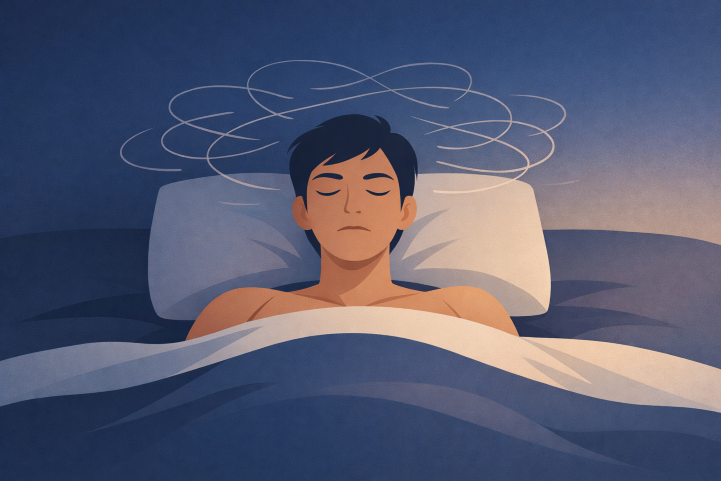
Many sleep problems are rooted in anxiety, even when anxiety isn’t obvious during the day.
Common signs of nighttime hyperarousal include:
These patterns reflect a nervous system that hasn’t learned how to fully downshift. In this state, melatonin may trigger drowsiness, but it can’t maintain sleep.
Melatonin may not be addressing the root issue if:
In these cases, the problem is not hormonal—it’s regulatory.
Sustainable sleep improves when the nervous system relearns how to relax. This doesn’t happen overnight, and it usually can’t be forced with supplements.
Effective approaches focus on:
This is why practices that work directly with breath, body awareness, and nervous system regulation are so effective for sleep.
Breathing is one of the fastest ways to influence the nervous system.
Slow, rhythmic breathing patterns:
Over time, consistent breath-based practices help the body enter sleep more naturally and stay asleep longer.
Rather than forcing sleep, these techniques create the internal conditions that allow melatonin to work as intended.
Struggling with anxious sleep, nighttime awakenings, or feeling “tired but wired”? The Sleep and Anxiety Protocol offers tools to calm the nervous system and support more natural, restorative sleep—without relying solely on supplements.
AspectMelatonin supplementationNervous system regulationPrimary roleSignals biological night to the brainCalms the stress response and supports safetyWhat it addressesCircadian timingRoot causes of sleep disruptionEffect on anxietyMinimal; may worsen anxiety in some peopleReduces anxiety and hyperarousalImpact on cortisolNo direct effectHelps lower nighttime cortisol activityEffect on falling asleepMay cause drowsinessImproves natural sleep onsetEffect on staying asleepOften limitedSupports deeper, more continuous sleepWorks during high stressOften ineffectiveSpecifically designed to helpInfluence on breathingNoneEncourages slower, more efficient breathingLong-term effectivenessInconsistentBuilds sustainable sleep regulationRisk of side effectsGrogginess, vivid dreams, early wakingGenerally low when practiced consistentlyBest use caseShort-term circadian shifts (jet lag)Chronic stress- or anxiety-related sleep issuesAddresses “tired but wired” feelingNoYesSupports natural melatonin releaseNoYes, indirectly
The Sleep and Anxiety Protocol focuses on the root cause of many sleep issues: chronic nervous system activation.
Instead of masking symptoms, it helps retrain the body’s stress response by: