



The body scan technique is a simple yet powerful relaxation practice that involves gently moving your attention through the body, noticing sensations without judgment. By bringing awareness to physical tension and allowing it to soften naturally, the body scan helps calm the nervous system, quiet mental chatter, and support deep rest. This article explains how the body scan works, provides step-by-step guidance for its practice, explores common challenges, and clarifies its distinction from practices such as Yoga Nidra. Whether you are new to meditation or looking for a practical way to unwind, the body scan offers an accessible path to relaxation.
Modern life keeps the nervous system in a near-constant state of alert. Even when we sit or lie down, the body often remains tense—jaw clenched, shoulders lifted, breath shallow. The body scan technique is effective because it addresses stress where it resides: in the body.
Rather than trying to “relax” through effort or positive thinking, the body scan invites you to notice what is already present. This simple shift—from doing to observing—signals safety to the nervous system. As awareness moves through the body, areas of holding begin to soften, breathing deepens naturally, and the mind settles.
For many people, the body scan becomes a gateway practice: easy to learn, adaptable to different situations, and effective even when the mind feels busy.
The body scan technique is a mindfulness-based practice in which attention is guided through different parts of the body, usually in a systematic sequence. The goal is not to change sensations, but to notice them with curiosity and ease.
During a body scan, you may observe:
There is no “right” sensation to feel. Awareness itself is the practice.
The body scan is commonly used in meditation, stress-reduction programs, and relaxation routines because it helps reconnect the mind to physical experience—an essential step in calming the stress response.
Stress activates the sympathetic nervous system, preparing the body for action. The body scan helps shift the body into a parasympathetic, rest-and-digest state through three key mechanisms:
Attention signals safety
When awareness moves gently through the body without urgency, the brain receives cues that there is no immediate threat.
Muscle tension releases naturally
Simply noticing an area of tightness often allows it to soften without conscious effort.
Breath deepens on its own
As awareness settles, breathing becomes slower and fuller, further supporting relaxation.
Over time, regular body-scan practice can increase body awareness, improve stress resilience, and facilitate relaxation even in challenging moments.
Ready to experience deeper, more consistent relaxation?
The body scan technique is a powerful way to relax through awareness, but many people find that guided breathwork helps the nervous system settle more quickly and stay calm longer.
SKY Breath Meditation, taught in the Art of Living Part 1 Course, uses rhythmic breathing techniques designed to reduce stress, support emotional balance, and restore energy—especially when life feels overwhelming.
If you’re ready to move from occasional relaxation to a more consistent sense of calm, learning a structured breathwork practice can be a natural next step.
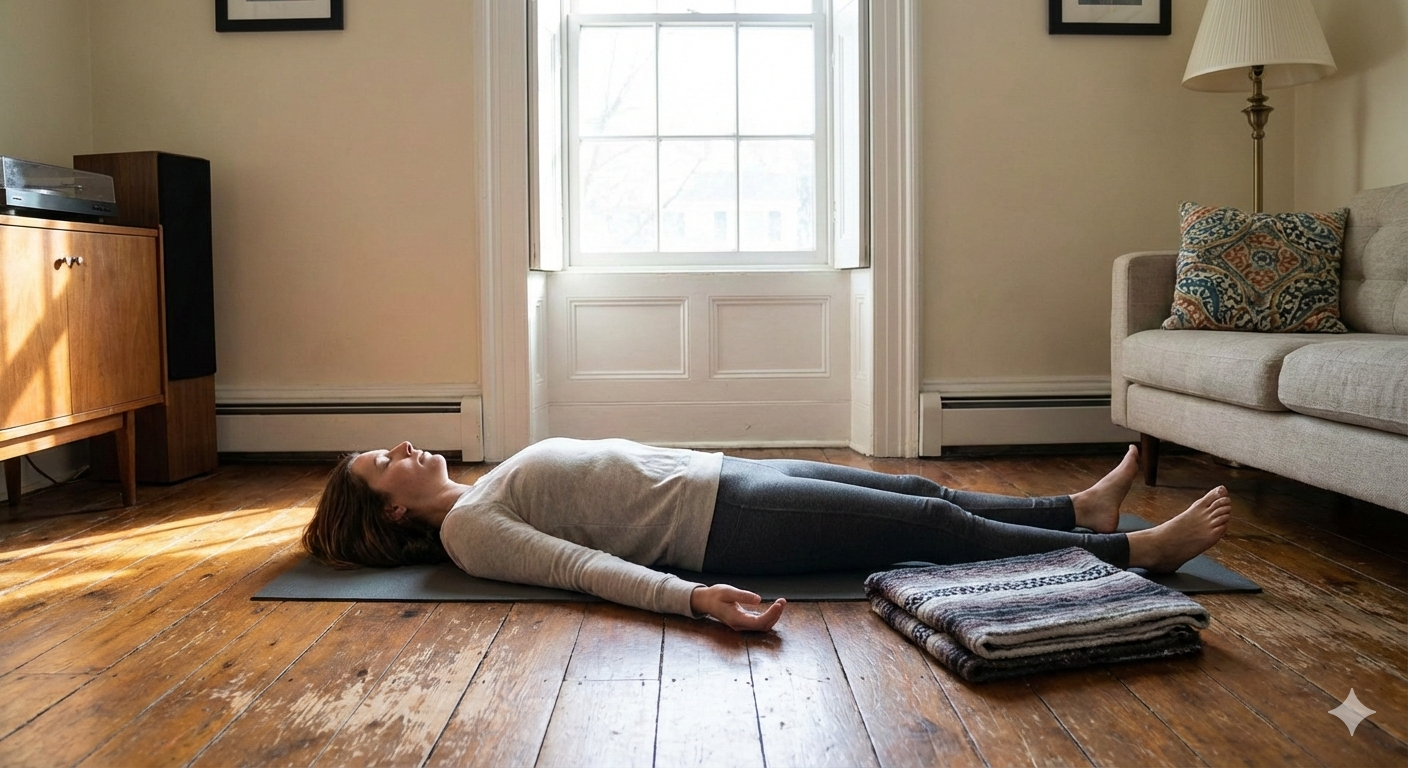
Choose a quiet place where you can be undisturbed for a few minutes. You may practice the body scan:
Use props such as a blanket or pillow to help the body feel supported.
Before you begin, take a moment to set an intention—not to relax perfectly, but simply to notice what is present. Let go of expectations about how the practice should feel.
Bring attention to your natural breathing.
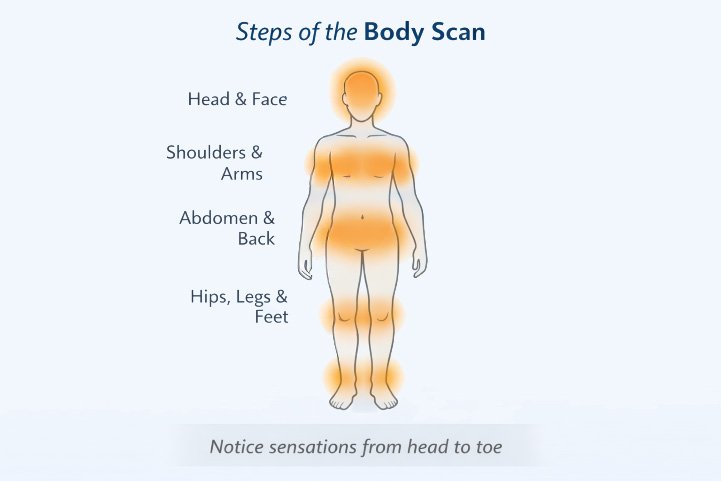
Move awareness through the body at a slow, steady pace. You may scan from head to toe or toe to head.
Head and face
Notice the scalp, forehead, eyes, cheeks, jaw, and tongue. Allow the face to soften.
Neck and shoulders
Observe sensations in the neck, shoulders, and upper back—common areas of tension.
Arms and hands
Feel the upper arms, elbows, forearms, wrists, palms, and fingers.
Chest, abdomen, and back
Notice the movement of the breath, the weight of the body, and any sensations in the torso.
Hips and legs
Scan the hips, thighs, knees, calves, ankles, feet, and toes.
At each area, pause briefly. Notice sensations without trying to change them.
If you notice discomfort or tightness:
Often, awareness alone is enough.
When the scan is complete, take a moment to sense the body as a whole. Slowly transition back to activity, maintaining a sense of ease.
Body scans can be adapted to fit your schedule and needs:
Consistency matters more than length. Even short, regular practices can have meaningful benefits.
The body scan is especially helpful:
Because it requires no special equipment, it can be practiced almost anywhere.
This is completely normal. Each time you notice the mind has wandered, gently bring attention back to the body—without judgment.
If sleep is not your goal, try practicing at a different time of day, such as seated practice. If sleep is your goal, this may be a benefit rather than a problem.
Sensations can be subtle. Noticing “nothing” is still awareness. Sensitivity often develops gradually with practice.
Over time, the practice becomes more intuitive and restorative.
For most people, the body scan is safe and accessible. If you experience discomfort:
If you are working with significant physical pain or trauma, guided support may be helpful.
Breath awareness focuses primarily on the rhythm of breathing, while the body scan moves attention through physical sensations. Many people find the body scan easier when their minds are restless.
Progressive muscle relaxation involves actively tensing and releasing muscles. The body scan relies on observation rather than effort, making it gentler for some practitioners.
Yoga Nidra is a structured, guided practice that often includes a body scan as one component, along with intention setting, breath awareness, and deep rest. While the body scan can stand alone, Yoga Nidra offers a more comprehensive, immersive relaxation experience.
You can practice mini body scans throughout the day:
These small moments of awareness help prevent stress from accumulating.
Yes. The body scan is one of the most beginner-friendly relaxation techniques.
Absolutely. You can move in any order that works for you.
You may notice the breath in different areas, but there is no need to direct or force it.