



High-functioning depression describes a pattern in which individuals maintain productivity, relationships, and outward success while experiencing persistent low mood, emotional fatigue, or inner numbness. Because it doesn’t always match stereotypes of depression, it often goes unnoticed and untreated. Research shows that chronic stress, nervous system dysregulation, and emotional suppression play key roles in this experience. Alongside professional mental health care, regulation-based practices—including breathwork—are increasingly studied for their role in supporting emotional resilience. This article explores the science of high-functioning depression and the emerging research behind SKY Breath Meditation as a supportive well-being practice.
From the outside, everything looks fine. You show up to work, meet deadlines, care for others, and keep moving forward. Friends describe you as capable, reliable, and “high functioning.” Yet internally, there’s a persistent heaviness—low motivation, emotional flatness, chronic exhaustion, or a sense of merely going through the motions.
This is the paradox of high-functioning depression.
Unlike more visible forms of depression, high-functioning depression often hides behind achievement, responsibility, and resilience. People experiencing it may not identify as depressed at all. They may attribute their inner struggle to stress, personality, or “just how life is.” As a result, support is often delayed until burnout, anxiety, or deeper depressive symptoms emerge.
Understanding high-functioning depression matters—not only for early intervention, but also for reshaping how we think about mental health. Productivity does not equal well-being. And feeling “functional” does not mean the nervous system is regulated or the mind is at ease.
High-functioning depression is not an official diagnosis in the Diagnostic and Statistical Manual of Mental Disorders (DSM-5). Instead, it is a descriptive term used by clinicians and researchers to capture a common pattern: individuals who meet some criteria for depression while continuing to perform daily responsibilities.
High-functioning depression often overlaps with:
What distinguishes high-functioning depression is not the absence of symptoms, but the presence of coping strategies—often driven by obligation, perfectionism, or external pressure—that keep life moving forward despite internal strain.

Because individuals remain active and engaged, symptoms are frequently internalized. Common signs include:
Individually, these symptoms may seem manageable. Together—and over time—they can quietly erode well-being.
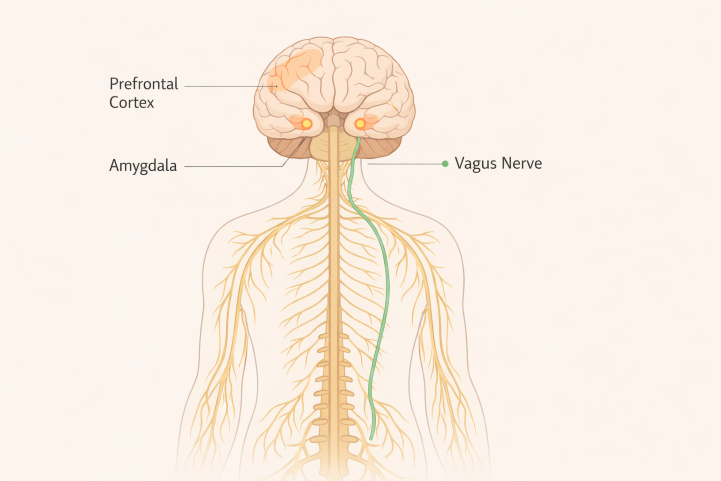
Research increasingly shows that depression is not simply a disorder of mood—it is a disorder of regulation.
Chronic low-grade depression is closely linked to dysregulation of the hypothalamic-pituitary-adrenal (HPA) axis, the body’s primary stress-response system. In high-functioning individuals, stress may not lead to collapse—but it often leads to overactivation.
This can result in:
Neuroimaging studies show altered activity in brain regions involved in emotional regulation, including the prefrontal cortex, amygdala, and default mode network. Over time, constantly “holding it together” can tax these systems.
Modern culture frequently rewards output over inner experience. High achievers are praised for endurance, not encouraged to ask whether their nervous system is overloaded.
Many people dismiss their symptoms by comparing themselves to others who “have it worse.” This self-minimization delays support and reinforces isolation.
Standard depression screenings often focus on visible impairment. When someone continues working, parenting, and socializing, distress may go unnoticed—even by healthcare providers.
Important note: Breathwork and lifestyle practices are supportive tools. They do not replace therapy, medication, or professional mental health care when needed.
Evidence-based therapies such as cognitive behavioral therapy (CBT), acceptance and commitment therapy (ACT), and psychodynamic approaches help address:
For some individuals, medication may also be an appropriate part of care.
Research consistently highlights the importance of:
This is where breath-based practices are gaining attention.

Breathing is unique: it is both automatic and voluntarily controlled. This makes it a direct entry point into the autonomic nervous system.
Studies show that slow, rhythmic breathing can:
Because high-functioning depression often involves chronic sympathetic activation, breathwork offers a way to restore balance without requiring cognitive effort.
SKY Breath Meditation (also known as Sudarshan Kriya) is a guided breath-based practice that uses specific rhythms to support nervous system regulation.
Unlike casual deep breathing, SKY Breath Meditation:
Peer-reviewed research has associated SKY Breath Meditation with:
These findings... [truncated]