



Many of us have felt stuck and weighed down by world events. Conversations with opposing viewpoints can lead to frustration and disappointment—not just with the other person, but sometimes with ourselves. We may replay an argument in our minds long after it’s over, turning it around again and again until we feel exhausted.
Whether the topic is political, religious, or scientific, it can sometimes be difficult to see another side of things. These days, many discussions feel more challenging and divisive than ever. And when everything feels heavy, optimism can quietly slip away.
Sometimes the issue isn’t so much the situation itself as it is the lens through which we are looking. And everything affects that lens—stress, anxiety, poor sleep, not eating well, and the many life events we all experience. Is it any wonder we feel stuck from time to time?
If you were just searching for “help me see things in a new light,” your vulnerable bravery already makes you open to considering different perspectives. You’ve already started shifting.
Whether you need a small adjustment, the ability to see your neighbor’s side of the story, or a giant dose of upliftment, I’m here to help you explore a different angle. Along the way, I hope to share a few surprising ways to move from feeling stuck to feeling genuinely lighter.
We’ve all heard the phrase “familiarity breeds contempt.” We could also say familiarity breeds a limited perspective.
When we become very familiar with a person or situation, subtle blinders can form. We may stop noticing new information or learning anything new. Our brains naturally simplify and generalize—especially when familiarity is involved.
What was, always will be.
The mind also seeks patterns that support those simplifications. It reinforces the stories we’ve told ourselves again and again. Add emotional memory, coloring that lens, and it’s no wonder we feel all the feelings, sometimes blinding us to a larger perspective.
Before we change the story, we may need to calm the storyteller.

One of the biggest contributors to losing perspective is stress.
If you’ve ever experienced overwhelming stress, you know how quickly it can affect your ability to think clearly. Vision can narrow, and thoughts can freeze, making it harder to process what’s happening in real time.
Stress can trigger a fight-or-flight response, which reduces cognitive flexibility, or a freeze-and-fawn response, which can shut down our thinking altogether. Either way, when we are stressed, we tend to see threats rather than possibilities.
This doesn’t have to be acute stress. Even when nothing stressful is happening in the moment, chronic stress can become the lens through which we see the world. Over time, nervous system dysregulation can lead to rigid thinking and make new perspectives harder to access.
If you want to broaden your perspective, learning how to manage stress is an essential place to begin.
If the idea of seeing things in a new light makes you a little nervous, that’s completely understandable. Let’s take a moment to define what a healthy, flexible perspective actually looks like.
First, it is not denial. No one is asking you to dismiss your feelings, your understanding, or your opinions.
It’s also not spiritual bypassing—the assumption that spiritual practices can magically fix everything. While spiritual tools can be powerful, they are not meant to erase complexity or bypass genuine emotions.
Seeing things in a new light is really about widening the frame. It means sitting where another sits and, for a moment, walking in someone else’s shoes. It means holding complexity without collapsing under it.
One helpful way to think about perspective shifts is through three dimensions: physiological, cognitive, and conscious.
In other words, we can shift perspective by calming the body, expanding the mind, and deepening awareness.
Let’s explore each of these.
We rarely notice our breath unless we are exerting ourselves or have a bronchial infection, but a little-known fact is that our breath is, among many things, a nervous system reset. There’s a reason why people say to take a deep breath when we are stressed. Stress and perspective are not a good combination. Stress is almost always the winner and perspective the loser. If you really want to see things in a new light, you will need a nervous system reset. The easiest way to accomplish this is to use rhythmic breathing to influence the vagus nerve.
Rhythmic, slow-paced breathing, particularly with elongated exhalations, directly stimulates the vagus nerve, thereby activating the parasympathetic ("rest and digest") nervous system. This increases heart rate variability, lowers heart rate, and reduces blood pressure.
Breathing exercises for clarity and a reset include diaphragmatic breathing, 4-7-8 breathing, the physiological sigh, and Sudarshan Kriya.
When your physiology shifts, so does your perception. This is great news if you’re struggling with how to see things differently. And even better news, it only takes five to ten minutes of slow, conscious breathing to affect your vagus nerve and facilitate a nervous system shift.
For more meaningful, enduring benefits, learning a daily breathwork practice, like Sudarshan Kriya, offers consistent results like:
All it takes is a daily ten-minute Kriya home practice taught on the Art of Living Part 1 Course. Participants often notice that insight arises naturally when the nervous system settles.

Use these questions for journaling, self-reflection, or meaningful conversation. Let your curiosity take the lead, not criticism or judgment.
Instead of thinking, “Why does this always happen to me?” or “What’s wrong with them?”, ask:
What else might be true?
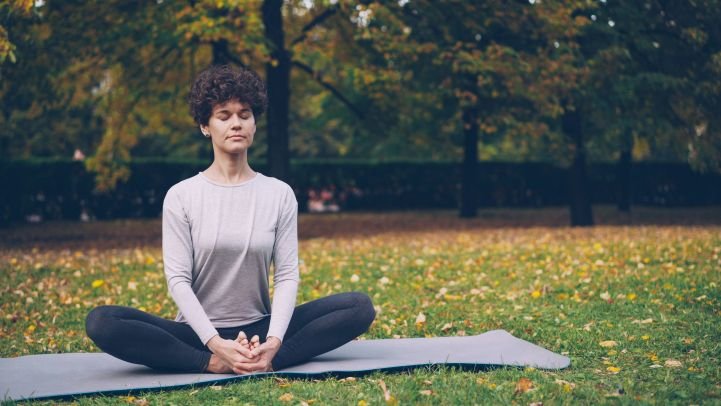
This may sound a bit “woo-woo”, but practicing being a witness is simply practicing mindfulness with intention. We all have the capacity to shift our attention to the “observer” within. It just takes a millisecond to think, “Let me take a step back and pay attention to what’s happening.” The simple act of silently paying attention, without suppressing any emotions, allows us to notice what’s happening outside as we watch our thoughts come and go. Before you know it, your perspective has shifted, and you’re no longer feeling stuck.
Simply:
Interestingly, this is where breathwork and meditation shine. Regular meditation cultivates the ability to step back from the mental treadmill and be more present.
Ok, so what if you’re facing insurmountable stress and the situation or person you’re trying to understand and connect with just isn't happening? You still have options. First, and foremost, accept the situation as it is. Don’t beat yourself up for struggling or for what feels like a failure. When you have done whatever you can from your side, let go of any regrets.
It’s also okay to feel grief, disappointment, and exhaustion. Rather than suppress these feelings, give yourself some grace and compassion. Sometimes the “new light” is simply softness, for yourself, and the “other.” Or, sometimes, it is asking for support from friends and family.
When you are feeling stuck, you need community more than ever. Connecting with others offers a chance to either seek advice or to put aside frustrations and enjoy a different vibe. It’s also a good time to seek spiritual companionship. Clergy members, meditation instructors, life coaches, astrologers, book club buddies, you name it, these connections can go a long way to supporting healthy shifts in perspective.
Structured practices like Art of Living’s Sudarshan Kriya, sometimes called SKY, and the mantra-based meditation technique, Sahaj Samadhi, give you the tools you need to gain clarity in difficult situations and even prevent feelings of being stuck in the first place.
You don’t have to be in this alone. In fact, shifting perspective on your own can be more challenging. We are all products of our past experiences, which unintentionally limit our perspective. By engaging with supportive communities, your opportunities to expand your perspective increase exponentially. In other words, we learn more about diverse perspectives when we don’t keep to ourselves. Shared wisdom accelerates clarity.
One such community worth exploring is within the Art of Living (AoL). The community connections within AoL are often... [truncated]