



Yoga offers a holistic understanding of the human being—one that includes not only the physical body, but also a subtle energetic system that governs vitality, emotional regulation, mental clarity, and awareness. This subtle body is composed of nadis, or energy channels, and chakras, or energy centers, through which prana, the vital life force, flows. The human body is understood as an integrated system of physical and energetic layers, in which the energy body underpins personal consciousness and spiritual development.
Rather than being abstract or symbolic, the subtle body provides a practical framework for understanding how breath, posture, attention, and emotional patterns influence well-being. These energy systems—chakras, nadis, and koshas—form interconnected networks within the energy body that are essential for the flow of vital life force and spiritual growth. When prana flows smoothly through the nadis and chakras, the nervous system stabilizes, the mind becomes clearer, and the body functions more efficiently. When energy flow is disrupted, imbalance may appear as stress, fatigue, emotional reactivity, or lack of focus.
The number of nadis in the human body is often cited as 72,000, though some ancient texts mention as many as 350,000.
This article offers an in-depth exploration of the subtle body, how energy flows through nadis and chakras, and how practices such as yoga, pranayama, meditation, and SKY Breath Meditation support balanced energy flow in everyday life.
Chakras, or energy centers, through which prana, the vital life force, flows, govern specific physical and psychological aspects of an individual.
In contemporary health discourse, the body is often discussed in mechanistic terms—muscles contract, hormones fluctuate, neurons fire. Yoga philosophy does not reject this view, but expands it. It recognizes that every physiological process is organized by an intelligence expressed through breath, sensation, and awareness.
The subtle body refers to this energetic layer of experience. It is not separate from the physical body, but interwoven with it. While the physical body can be observed externally, the subtle body is experienced internally—as vitality, mood, intuition, and clarity. This dimension is often referred to as the subtle level, where subtle energy flows through systems such as nadis and chakras, playing a crucial role in spiritual awakening, healing, and deepening yoga experiences.
At the center of the subtle body is prana, often translated as “life force.” Prana is what animates the breath, fuels digestion, sharpens perception, and supports movement. The five senses serve as a bridge between the physical and subtle realms, enabling us to perceive and integrate both gross and subtle aspects of reality.
In daily life, prana is constantly shaped by how we breathe, move, think, and respond emotionally.
For example:
Yoga practices exist to restore intelligent flow, not to manipulate energy forcefully.
The subtle body is also the vehicle for our experiences in the dream state and during the transition after death.
The subtle body functions through nadis, which are pathways that distribute prana throughout the system. Nadis are not physical structures, yet their effects are tangible. While blood vessels are anatomical structures responsible for blood flow, nadis are subtle channels within the nadi systems that carry prana, the vital life force. Anyone who has experienced a sudden wave of calm after deep breathing or a surge of agitation under stress has experienced shifts in pranic flow.
Classical yogic texts describe thousands of nadis, emphasizing that energy reaches every part of the body. Nadi systems are described as having nadis that radiate outward from energy centers (chakras), permeating the entire body like spokes of a wheel. This explains why emotional stress can manifest as physical symptoms and why physical practices can influence mental states.
When nadis are functioning well:
When nadis are strained or congested:
Practices such as pranayama aim to cleanse the nadis, thereby facilitating the free flow of prana.
Rather than targeting symptoms, yogic practices aim to improve the overall quality of energy circulation.
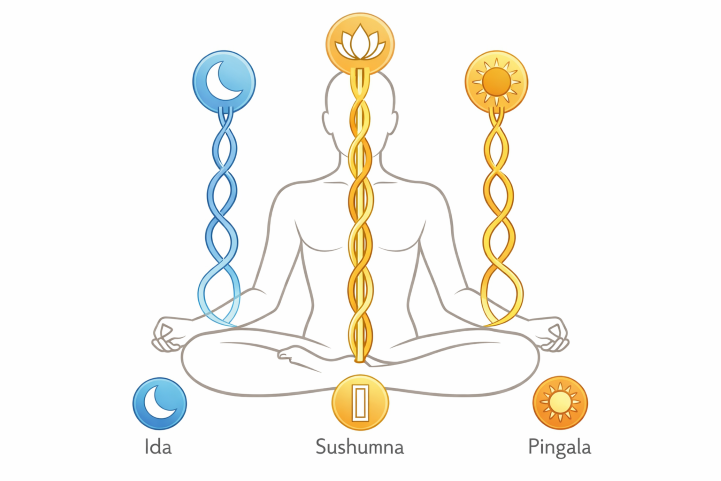
Among the many nadis, three are considered foundational—these are the three major nadis: ida, pingala, and sushumna. The ida and pingala nadis crisscross along the spine and interact with the centrally located sushumna nadi, which runs through the spinal canal. These three major nadis originate at the base of the spine, specifically at the Muladhara chakra, and travel upward along the spinal column. The junctions where the ida, pingala, and sushumna nadis meet along the spinal column are called chakras. Sushumna nadi is the central channel and is considered the most important nadi for spiritual awakening.
Ida Nadi runs along the left side of the spine and corresponds to the left nostril. Ida Nadi is associated with lunar energy and feminine energy, representing qualities of receptivity, intuition, and emotional balance. Ida nadi is associated with the left nostril and represents lunar energy, while pingala nadi is associated with the right nostril and represents solar energy. It governs qualities associated with receptivity, rest, and internal processing.
When Ida is balanced, individuals often experience:
In modern terms, Ida supports parasympathetic nervous system activity—the state associated with digestion, repair, and calm.
However, prolonged Ida dominance may result in:
Balance, not dominance, is the goal.
Pingala Nadi runs along the right side of the spine and corresponds to the right nostril. Pingala Nadi is associated with solar energy and masculine energy, making it a key component of the pingala nadis system as a solar, activating pathway. It governs action, focus, and outward engagement.
Balanced Pingala supports:
This aligns with sympathetic nervous system activation—the capacity to respond, act, and engage.
Excess Pingala activation, common in high-stress lifestyles, may show up as:
Again, the goal is dynamic balance, not suppression.
You may enjoy reading The Nose Knows: BioHacking Energy Flow Through the Nostrils.
Sushumna Nadi runs along the center of the spinal column, serving as the spine's central pathway and representing integration rather than polarity. When Ida and Pingala are balanced, energy naturally enters this central channel.
Sushumna is associated with:
This state does not feel dramatic. It often feels quiet, grounded, and steady—a quality many people describe after effective meditation or breathwork.
NadiLocationAssociated qualitiesBalance feels likeIdaLeft side of spineCalm, rest, reflection (lunar)Emotional steadiness, relaxationPingalaRight side of spineAction, focus, vitality (solar)Motivation, clarity, healthy energySushumnaCenter of spineIntegration, balanceStillness, centered awareness
The chakras are junction points along the central channel where energy is refined and expressed. There are seven principal chakras in the human body, known as the major chakras, each associated with specific qualities and functions. In the seven chakra system, energy is located at these centers, which act as hubs from which energy and the nadis wheel radiate outward, like the spokes of a wheel. Each chakra corresponds to:
Rather than being isolated centers, chakras function as an integrated system. Balance at one level supports balance at all levels.
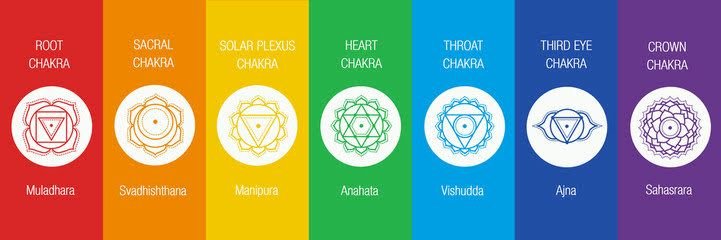
Muladhara governs physical stability and safety. Known as the muladhara chakra, it is located at the base of the spine, which is considered the foundational point of the... [truncated]