

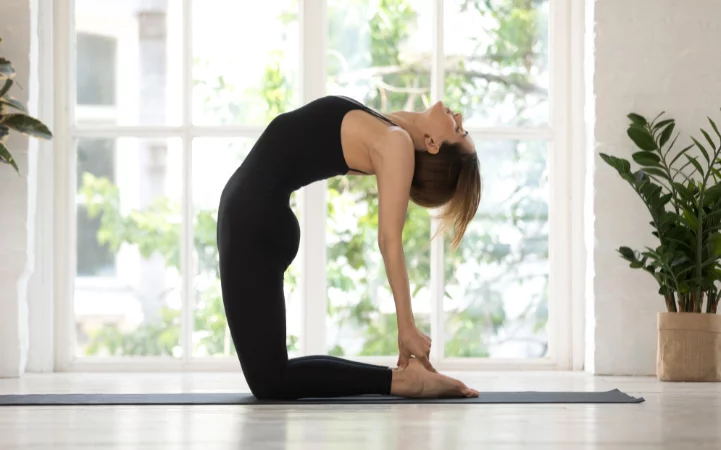
Camel pose is a deep backbend. It’s great for opening the chest and the heart chakra.
Camel pose is also known as Ustrasana (OOHS-tra-AA-SUN-aa) in Sanskrit. Ustra means camel, and asana means pose.
Level of difficulty: Intermediate
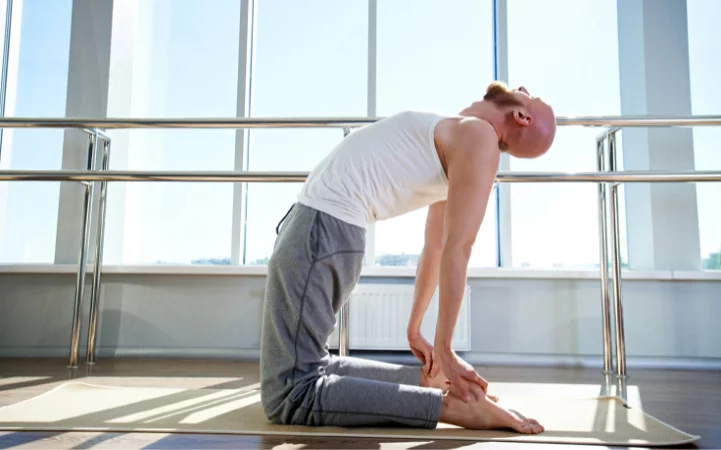
When camel pose is practiced daily as part of a yoga sequence, this pose can help alleviate the negative effects of a sedentary lifestyle. Camel pose also has mental benefits like feeling less stressed.
Here are some more benefits of camel pose:
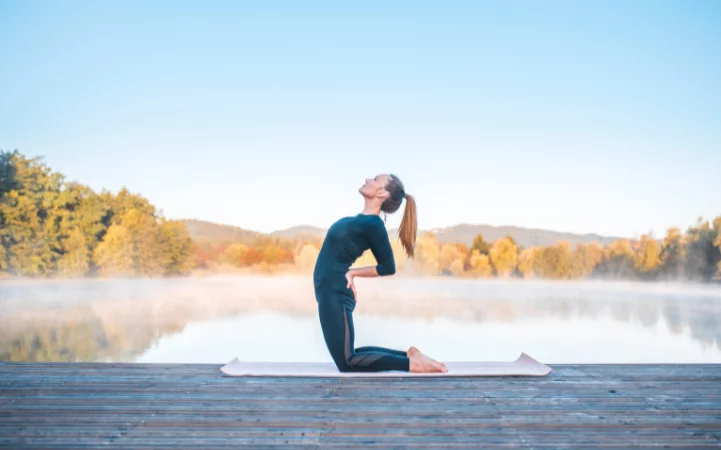
Who should avoid doing camel pose? Anyone who has the following conditions should not do camel pose:
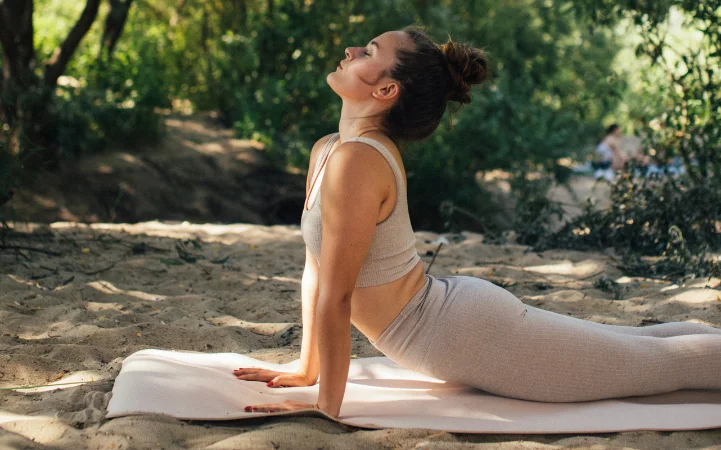
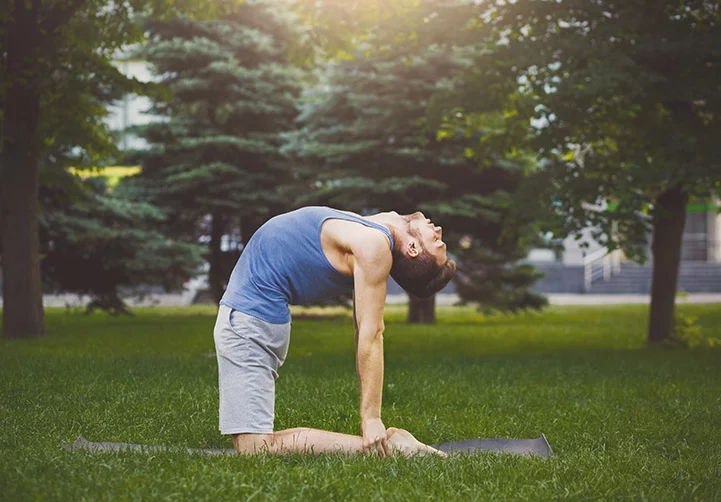
1. Starting position - Kneel on the floor with your legs hip width apart and in line with your shoulders. If you have knee discomfort, place a folded blanket on the yoga mat underneath you. Your thighs should be perpendicular to the floor with the soles of your feet facing the ceiling.
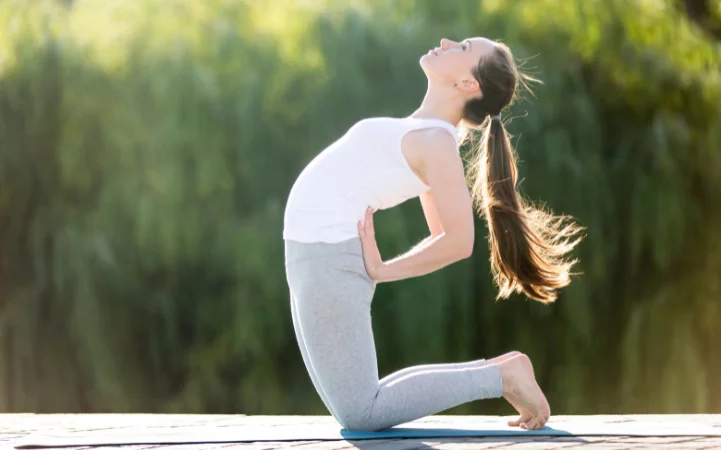
2. Place your hands on your lower back with your fingers pointing down and pelvis forward.
3. As you inhale, tuck in your tailbone towards the pubis as if your navel is pulling it. Arch your upper spine and reach back for your heels. Straighten each arm with shoulder blades touching, and expand your rib cage.
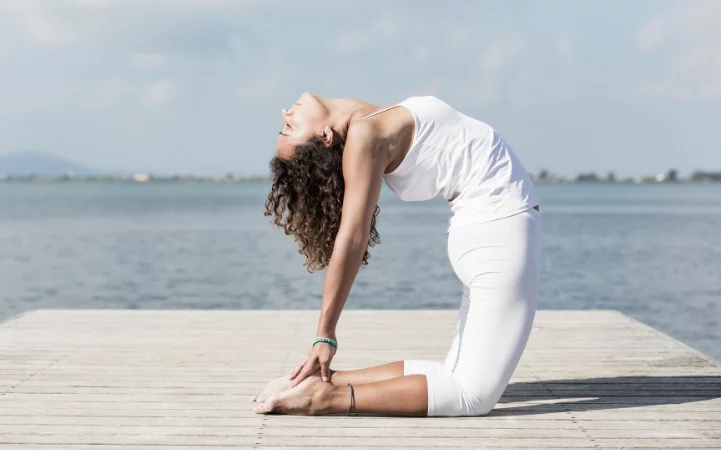
Quick Tip: Only drop your head back if it’s comfortable for your neck.
4. Relax the gluteal and lower back muscles. Stay in this yoga posture for a few breaths.
Quick Tip: Avoid squeezing the glutes, as this will crunch the lower back.
5. To come out of camel pose, exhale, bringing your chin tucked in toward your chest and your hands onto your hips. Engaging the lower belly, use your hands to support your lower back. Take your time as you lift yourself up with care.
Breathing is vital to life and your yoga practice. SKY Breath Meditation enhances both! Here are just a few ways SKY can help you:
Please attend our FREE breath and meditation session to learn more about SKY Breath Meditation, while also enjoying a guided breathing exercise and meditation.