


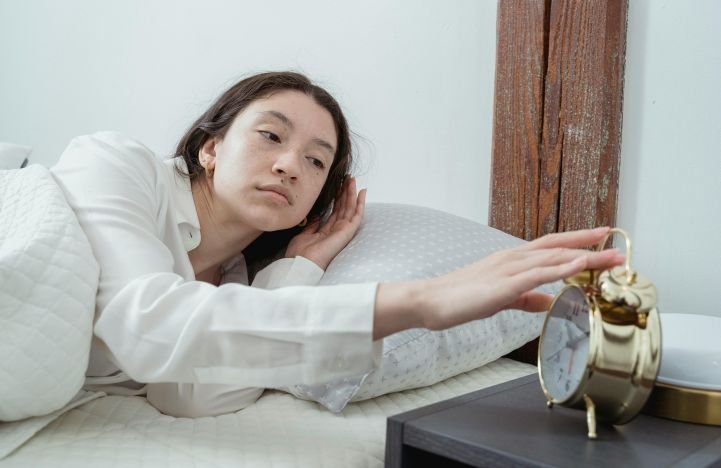
A lot of people use alcohol to “take the edge off” before bed. Maybe it’s a glass of wine after a stressful day, a cocktail to quiet the mind, or a nightcap that’s become part of the evening routine. And frankly, at first, it can feel helpful. You relax. Your body softens. You fall asleep faster.
But there’s an important distinction between sedation and actual rest.
Just because something knocks the nervous system down for a few hours doesn’t necessarily mean it helps it recover.
This article explores how alcohol affects sleep quality, anxiety, REM sleep, nighttime waking, and nervous system regulation. We’ll also look at why so many people wake up at 3 a.m. anxious after drinking, why alcohol can quietly worsen insomnia over time, and what to do instead if your body has forgotten how to settle naturally at night.
Alcohol is tricky because it does two opposite things in the same night.
At first, it slows the nervous system down. Later, alcohol disrupts normal sleep patterns, especially in the second half of the night.
That’s why people often say things like:
All of that makes sense physiologically.
Alcohol initially acts as a sedative. It increases the activity of calming neurotransmitters in the brain, which is part of why your body may feel heavier or quieter after a drink or two. But once your body starts metabolizing the alcohol, the nervous system often rebounds in the opposite direction.
This is where sleep becomes lighter, more fragmented, and less restorative, with frequent awakenings during the second half of the night.
It also acts as a diuretic, which can mean more nighttime urination and more sleep disruption.
As your body metabolizes alcohol, your heart rate can rise as the sympathetic nervous system becomes more active.
Your body may technically be asleep, but internally, it’s still working hard.

This is the part that confuses people.
Drinking alcohol helps some people feel sleepy quickly at first, but it does not support better sleep overall. Alcohol may help you fall asleep faster, especially if you are stressed, anxious, overthinking, emotionally overloaded, or running on adrenaline all day long.
For a short window of time, alcohol can create the illusion of exhaling and letting go.
The problem is that the effect is temporary, and rebound insomnia can show up after the sedative effect wears off. Once blood alcohol levels start dropping during the night, the nervous system can shift back toward activation. That rebound can show up as:
A lot of people assume they slept well because they fell asleep quickly. But sleep quality and sleep onset are not the same thing.
You can lose consciousness quickly and still not get deeply restorative sleep.
One of the biggest issues with alcohol and sleep is what happens to REM sleep.
In a normal sleep cycle, you move through several sleep stages each night, from lighter sleep to deeper sleep and then to rapid eye movement (REM), with each cycle building the sleep profile needed for high-quality sleep.
REM sleep is the stage connected to emotional processing, learning, memory consolidation, and nervous system integration. It’s also deeply connected to mood regulation. This stage is marked by higher brain activity and plays an important role in mood and memory.
Alcohol suppresses REM sleep, especially earlier in the night, disrupting sleep patterns and the natural progression of the sleep cycle. It can also disrupt circadian rhythms and interfere with the body’s ability to produce melatonin, which regulates sleep-wake cycles.
At the same time, it may temporarily increase deeper sleep during the first half of the night, which is partly why people sometimes feel like they “slept hard” after drinking. But later, as the alcohol wears off, sleep often becomes lighter and more disrupted.
This rebound effect matters.
It’s one reason people can wake up feeling emotionally fragile, mentally foggy, irritable, or strangely anxious after drinking, even if they were technically in bed for eight hours.
The nervous system didn’t fully complete the overnight repair it was trying to perform. All of this adds up to a lot of negative impact.
This is something people don’t always connect.
Alcohol can temporarily numb anxiety in the evening while quietly increasing it later at night or the next day.
Part of this has to do with sleep disruption, and over time, poor sleep can feed anxiety, mental health strain, and other health problems. And part of it involves stress hormones, blood sugar fluctuations, dehydration, inflammation, and nervous system rebound.
For people already living in a chronically activated state, alcohol consumption can become part of a difficult cycle that contributes to ongoing sleep-related problems:
Ongoing poor sleep can deepen this pattern and make it harder for the body to settle down without sedation.
Over time, the nervous system can begin to rely on sedation rather than learning to settle down naturally.
And those are not the same thing.
Alcohol also relaxes the muscles that help keep the airway open during sleep, and these relaxing effects on the throat muscles increase the risk of snoring and sleep apnea by narrowing the airway (airway resistance) and causing throat collapse. Alcohol can also increase mouth breathing and lead to oxygen drops during sleep.
For people who already have sleep apnea or suspect they might, alcohol close to bedtime can make symptoms noticeably worse.
It may also interfere with the brain’s breathing signals, contributing to central sleep apnea.
And when oxygen levels repeatedly drop overnight, the nervous system often becomes even more stressed and dysregulated.
This can contribute to:
☐ Morning headaches
☐ Daytime fatigue
☐ Anxiety
☐ Brain fog
☐ Poor stress tolerance
☐ Higher risk of stroke
Sometimes what people think is “bad sleep” is actually a nervous system struggling to recover from repeated oxygen disruption all night long.
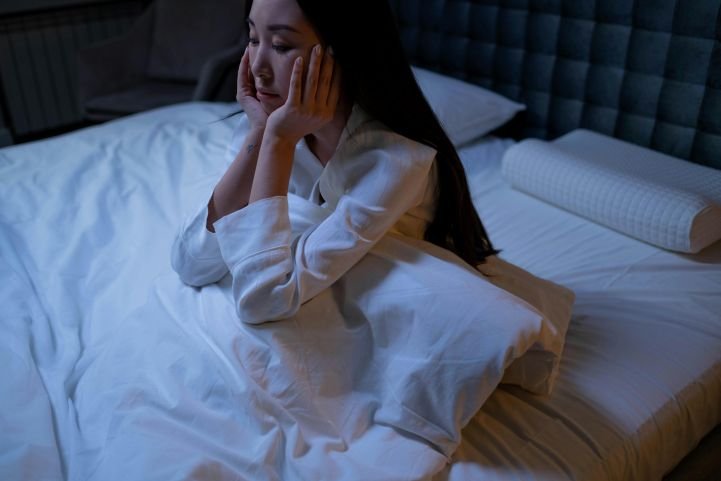
One of the more frustrating things about alcohol is that some people use it as a sleep aid, even though that habit can quietly make insomnia worse.
In the beginning, alcohol may shorten the time it takes to fall asleep. But over time, regular nighttime drinking is associated with poorer sleep quality and higher rates of insomnia, and long-term use can create tolerance, so people may need to consume more and more alcohol to feel the same effect.
The nervous system can become less confident in its own ability to power down naturally.
And once that happens, bedtime itself can start feeling stressful. People may develop trouble sleeping, including difficulty falling asleep and staying asleep, despite using alcohol.
This is especially common in people who are already highly wired, high-functioning, anxious, exhausted, or emotionally overstimulated. People who rely on alcohol for sleep often end up sleep-deprived, feeling sleepy during the day, and facing added long-term risks such as depression, heart disease, and strokes.
If someone chooses to drink occasionally, timing matters.
Many sleep experts recommend finishing alcoholic drinks three to four hours before bedtime, since the body metabolizes alcohol at about one drink per hour. Some people, especially those with anxiety, insomnia, or sleep apnea, may need longer than that to notice a meaningful improvement in sleep quality.
Even just two drinks too close to bedtime can still affect sleep quality. So the amount of alcohol plays a role as well.
But, there’s also a lot of individual variability here. Age, stress levels, hormones, metabolism, medications, nervous system sensitivity, and overall health all affect how alcohol impacts sleep.
Some people are far more sensitive than they realize and never connect the dots.
There’s a reason that sleep medications’ labels state: Do not drink alcohol when taking this medication. Alcohol and sleep medications are a dangerous combination.
Alcohol should not be casually mixed with sleeping pills, sedatives, or sedative medications. Both alcohol and sleep medications depress the central nervous system, and together they can increase the risk of:
This includes medications like:
If someone is using alcohol to sleep regularly or combining substances to get rest, it’s worth talking with a healthcare provider instead... [truncated]